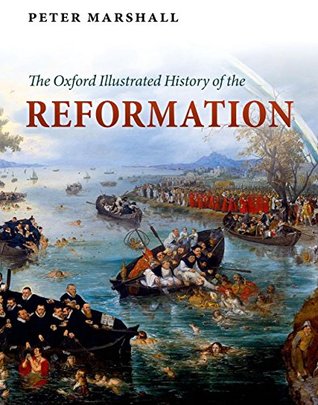
The Reformation was a seismic event in history, whose consequences are still working themselves out in Europe and across the world. The protests against the marketing of indulgences staged by the German monk Martin Luther in 1517 belonged to a long-standing pattern of calls for internal reform and renewal in the Christian Church. But they rapidly took a radical and unexpected turn, engulfing first Germany and then Europe as a whole in furious arguments about howGods will was to be discerned, and how humans were to be saved. However, these debates did not remain confined to a narrow sphere of theology. They came to reshape politics and international relations; social, cultural, and artistic developments; relations between the sexes; and the patterns and performances of everyday life. They were also the stimulus for Christianitys transformation into a truly global religion, as agents of the Roman Catholic Church sought to compensate for losses in Europe with new conversions in Asia and the Americas. Covering both Protestant and Catholic reform movements, in Europe and across the wider world, this beautifully illustrated volume tells the story of the Reformation from its immediate, explosive beginnings, through to its profound longer-term consequences and legacy for the modern world. The story is not one of an inevitable triumph of liberty over oppression, enlightenment over ignorance. Rather, it tells how a multitude of rival groups and individuals, with or without the support of politicalpower, strove after visions of reform. And how, in spite of themselves, they laid the foundations for the plural and conflicted world we now inhabit.






















The Reverend Dr. Peter Marshall was a Scottish-American preacher, and twice served as Chaplain of the United States Senate.
Born in Coatbridge (North Lanarkshire), Scotland, Marshall heard a strong calling to the ministry at a young age. Despite having no money, he nevertheless migrated to New York in 1927 when he was 24. He graduated from Columbia Theological Seminary in 1931, when he became the pastor of First Presbyterian Church, a small, rural church in Covington, Georgia. After a brief pastorate, Marshall accepted a call to Atlanta's Westminster Presbyterian Church in 1933. It was in Atlanta that he met his future wife, Catherine Wood, a student at Agnes Scott College whom he married in 1936. Marshall became pastor of the New York Avenue Presbyterian Church in Washington, D.C. in 1937 and was appointed twice as U.S. Senate Chaplain, serving from January 4, 1947 until his sudden death just over two years later. He was 46 years old.
... Show more