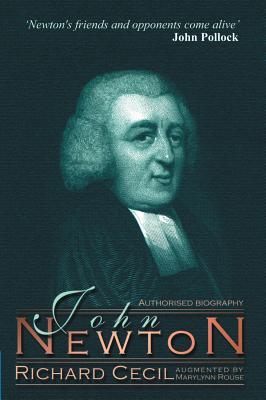
Richard Cecil's classic biography of Newton is considered to be his 'authorised' biography as he both knew Newton well and allowed him to see most of the manuscript before publication. Marylynn Rouse has used the intervening years, and the wealth of information since made public, well by adding many other details and contemporary happenings to Newton's life story.
Some aspects of Newton's life are well-known: his involvement in the slave trade; his friendship with the poet William Cowper and the politician William Wilberforce; his gift as a hymn writer; his ministry, first in Olney, then in London.
But Marylynn Rouse has gone further and provides fascinating pieces of information regarding those who influenced Newton as well as those who were influenced by him. Here we see not only Newton the public figure, but we also see Newton in private, as a loving husband and father, as a concerned pastor and letter-writer.






















Richard Cecil was a leading Evangelical Anglican clergyman of the 18th and 19th centuries. His father was an Anglican while his mother was a Dissenter, whose family had been devout Christians for generations.
He later became minister of two small livings in Lewes, Sussex. After the death of his parents, he moved, because of bad health, to Islington, London and preached at different churches and chapels there. For some years he preached a lecture at Lothbury at 6 o'clock on a Sabbath morning, and later an evening lecture in Orange Street, followed by the chapel in Long Acre. From 1787 he preached the evening lecture at Christ Church, Spitalfields.
In 1788 he became minister of St John's Chapel, Bedford Row, which became a major Evangelical Anglican venue continuing into the mid 19th century.
... Show more