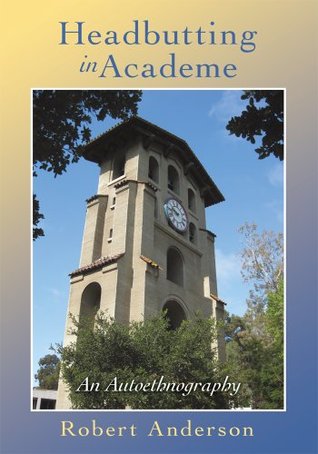
"Mills College, a small college in the foothills of Oakland, where I have taught for many years, is just ten minutes by car from Fremont High, a failing inner-city school. At Fremont I volunteered to work with teachers and administrators struggling to transform the old school into six new small autonomous college preparatory high schools, the Fremont Federation.
During that decade, 1999-2009, contrasts between Fremont and Mills were enormous: a public secondary school versus a private college, boys and girls versus women only, an underperforming educational program versus a top-ranked degree-granting institution, the flat lands versus the hills, poverty versus prosperity, crime versus safety. And yet, the two institutions are similar in one very important way. Teachers struggle in comparable ways with governance issues of power and control.
That similarity makes comparative analysis worth doing. The two institutions provide ethnographic support for a two-system model of educational policy analysis. Teaching in those two very different places is similarly challenged by an opposition of rigid bureaucratic dominance, symbolized as a matrix, in cultural conflict with the fluid, convoluted, open-ended world that teachers grapple with, symbolized as a labyrinth.
This tale of two schools was written as an autoethnography. I did not conduct formal research. I offer here a narrative ethnography based on my own life experience as a teacher who happens to be a professional anthropologist."






















Sir Robert Anderson was born in Dublin, Ireland and was of Scottish descent. His father was an elder in the Irish Presbyterian Church and he was raised in a religious home. Anderson's conversion took place after listening to a sermon delivered by John Hall.
Sir Robert Anderson graduated from Trinity College, Dublin, in 1862 and was called to the Irish Bar in 1863. He later became Assistant Commissioner of the Metropolitan Police and Chief of the Criminal Investigation Department at Scotland Yard. When he retired in 1901, he was made Knight Commander of the the Order of the Bath. W. H. Smith, on the floor of the House of Commons, said Sir Robert "had discharged his duties with great ability and perfect faithfulness to the public."
Sir Robert Anderson was the chief inspector for Scotland Yard. He was greatly respected for his skill as an investigator. When Anderson wasn't writing on subjects related to crime, he wrote books on Christian prophecy. He helped establish the fact that 69 of Daniel's 70 weeks have now transpired, and that the tribulation will be the 70th week. Sir Robert Anderson's book, The Coming Prince, has become a foundational resource for all dispensationalists.
... Show more