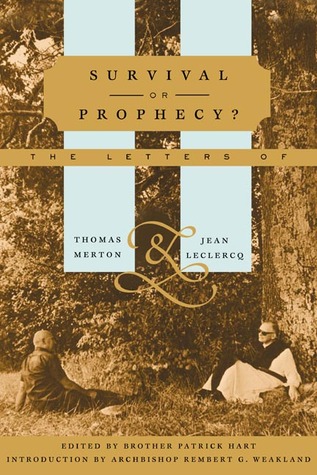
Introduction by Archbishop Rembert G. Weakland.Two monks in conversation about the meaning of life and the nature of solitude.Thomas Merton, the American Trappist monk who wrote "The Seven Storey Mountain," spent his entire literary career (1948- 68) in a cloistered monastery in Kentucky. His great counterpart, the French Benedictine monk Jean Leclercq, spent those years traveling relentlessly to and from monasteries worldwide, trying to bring about a long-needed reform and renewal of Catholic religious life. Their correspondence over twenty years is a fascinating record of the common yearnings of two ambitious, holy men. "What is a monk?" is the question at the center of their correspondence, and in these 120 letters they answer it with great aplomb, touching on the role of ancient texts and modern conveniences; the advantages of hermit life and community life; the fierce Catholicism of the monastic past and the new openness to the approaches of other traditions; the monastery's impulse toward survival and the monk's calling to prophecy. Full of learning, human insight, and self-deprecating wit, these letters capture the excitement of the Catholic Church during the run-up to the Second Vatican Council, full of wisdom, full of promise.






















Thomas Merton wrote more than 70 books, mostly on spirituality, as well as scores of essays and reviews. Merton was a keen proponent of interfaith understanding.
Interest in his work contributed to a rise in spiritual exploration beginning in the 1960s and 1970s in the US. Merton's letters and diaries, reveal the intensity with which their author focused on social justice issues, including the civil rights movement and proliferation of nuclear arms. He had prohibited their publication for 25 years after his death. Publication raised new interest in Merton's life.
... Show more