
Quote by C.I. Scofield

“Abraham's bosom." Both designations were Talmudic, but adopted by Christ in # Lu 16:22 23:43 The blessed dead were with Abraham, they were conscious and were "comforted" # Lu 16:25 The believing malefactor was to be, that day, with Christ in "paradise." the lost were separated from the saved by a "great gulf fixed" # Lu 16:26 The representative man of the lost who are now in hades is the rich man of # Lu 16:19-31 He was alive, conscious, in the full exercise of his faculties, memory, etc., and in torment. (2) Hades since the ascension of christ. So far as the unsaved dead are concerned, no change of their place or condition is revealed in Scripture. At the judgment of the great white throne, hades will give them up, they will be judged, and will pass into the lake of fire # re 20:13,14 But a change has taken place which affects paradise. Paul was "caught up to the third heaven. . .into paradise" # 2Co 12:1-4 Paradise, therefore, is now in the immediate presence of God. It is believed that # Eph 4:8-10 indicates the time of the change. "When he ascended up on”
Be the first to react on this!



Grupo de marcas


















© 2026 Bibleportal.com Reservados todos los derechos.
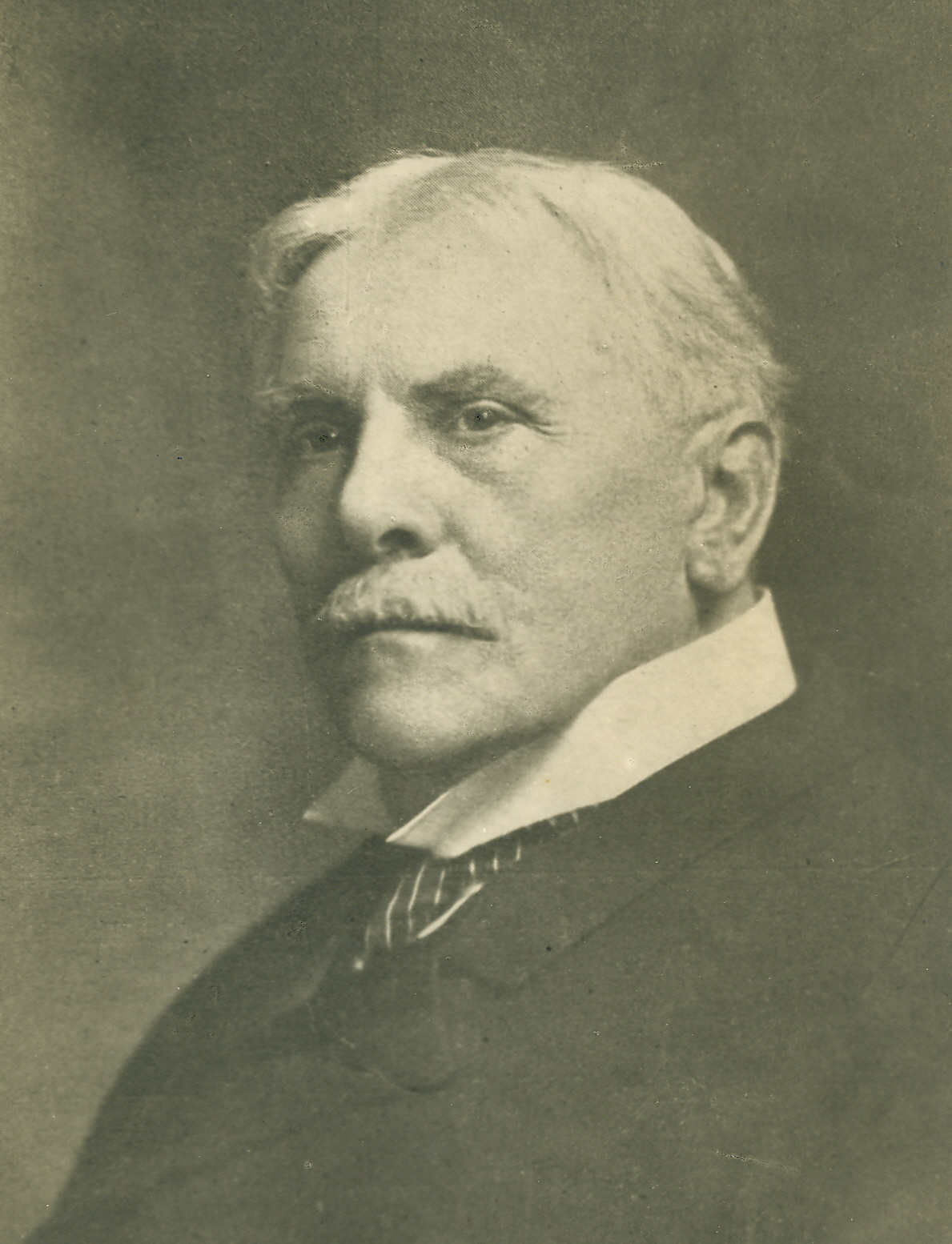
Cyrus Ingerson Scofield was an American theologian, minister and writer. During the early twentieth century, his best-selling annotated Bible popularized dispensationalism among fundamentalist Christians.
President Grant appointed him United States Attorney for Kansas in 1873. He worked as a lawyer in Kansas and Missouri from 1869 to 1882. He was converted at 36, he was ordained to the Congregational ministry in 1882, and served as pastor of the First Church, Dallas, Texas (1882-1895), and again (1902-1907); and of the Moody Church, Northfield, Massachusetts (1895-1902).
Through the influence of private talks with Hudson Taylor of the China Inland Mission and also a book by a brilliant journalist traveler, William Eleroy, Scofield established the Central American Mission in 1890. Later years were spent lecturing on biblical subjects on both sides of the Atlantic. Hundreds of thousands have appreciated and use his famous Scofield Reference Bible, the work for which he is best remembered.
Cyrus Ingerson Scofield was an American theologian, minister and writer. He was born in Lenawee County, Michigan, but during the American Civil War he served for a year as a private in the 7th Tennessee Infantry, C.S.A.. By 1866 he was in St. Louis, Missouri working in his brother-in-law's law office. Admitted to the Kansas bar in 1869, he was elected to the Kansas legislature as a Republican in 1871 and 1872 and was appointed U.S. attorney for the district of Kansas.
After his conversion to evangelical Christianity in 1879, Scofield assisted in the St. Louis campaign conducted by Dwight L. Moody and served as the secretary of the St. Louis YMCA. Significantly, Scofield came under the mentorship of James H. Brookes, pastor of Walnut Street Presbyterian Church, St. Louis, a prominent dispensationalist premillennialist.
Scofield's correspondence Bible study course was the basis for his Reference Bible, an annotated, and widely circulated, study Bible first published in 1909 by Oxford University Press. Scofield's notes teach dispensationalism, a theology that was in part conceived in the early nineteenth century by the Anglo-Irish John Nelson Darby, who like Scofield had also been trained as a lawyer.
Scofield died at his home in Douglaston, Long Island, in 1921.