
Quote by G.K. Chesterton

“As we have taken the circle as a symbol of reason and madness, we may very well take the cross as a symbol at once of mystery and health. Buddhism is centripetal, but Christianity is centrifugal: it breaks out. For the circle is perfect and infinite in its nature; but it is fixed for ever in its size; it can never be larger or smaller. But the cross, though it has at its head a collision and a contradiction, can extend its four arms for ever without altering its shape. Because is has a paradox in its center it can grow without changing. The circle returns upon itself and is bound. The cross opens its arms to the four winds; it is a signpost for free travelers.”
― G.K. Chesterton ,
from Orthodoxy
Be the first to react on this!



Grupo de marcas


















© 2025 Bibleportal.com Reservados todos los derechos.
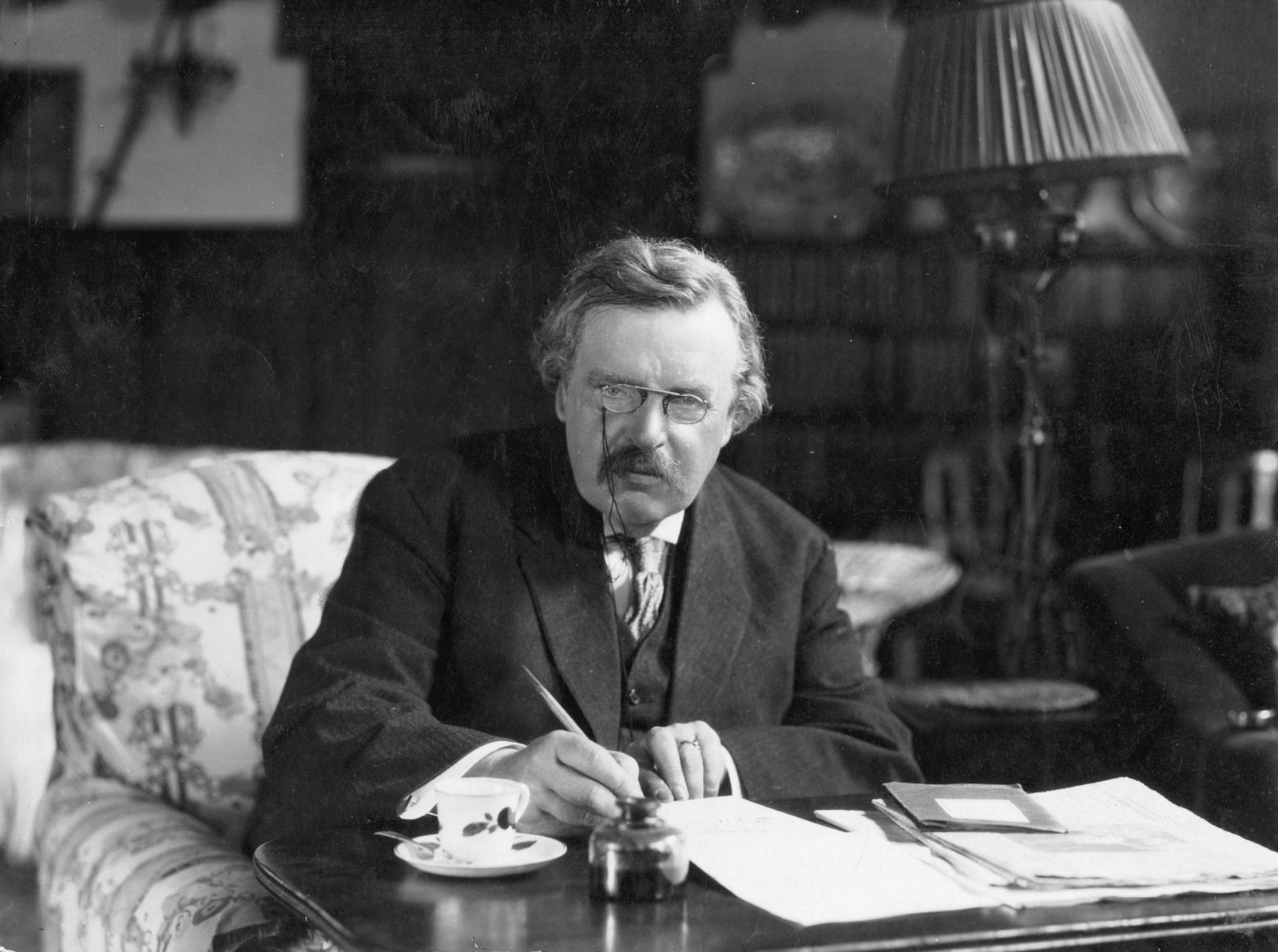
Gilbert Keith Chesterton was one of the most influential English writers of the 20th century. His prolific and diverse output included journalism, philosophy, poetry, biography, Christian apologetics, fantasy and detective fiction.
Chesterton has been called the "prince of paradox". Time magazine, in a review of a biography of Chesterton, observed of his writing style: "Whenever possible Chesterton made his points with popular sayings, proverbs, allegories—first carefully turning them inside out.