
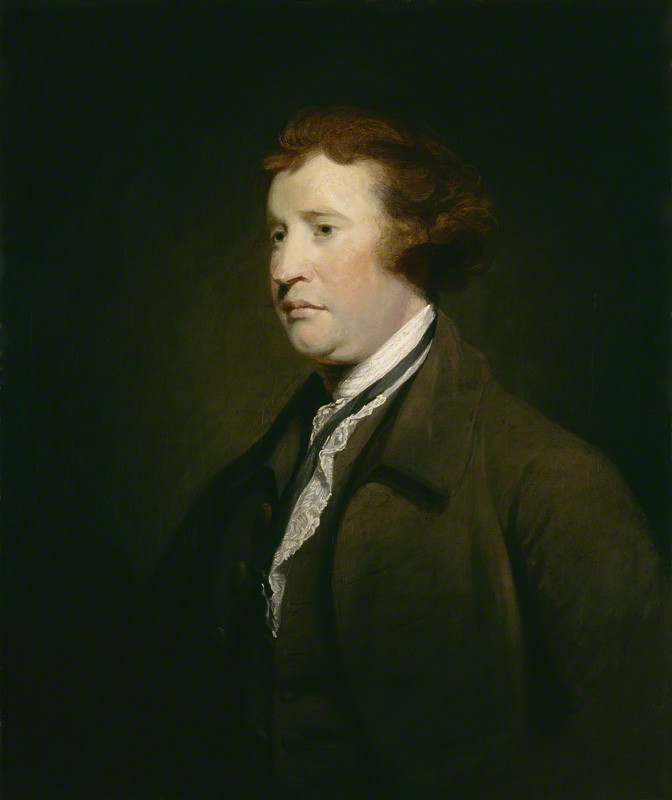
Quote by Edmund Burke

“It were endless to enumerate all the passages, both in the sacred and profane writers, which establish the general sentiment of mankind, concerning the inseparable union of a sacred and reverential awe, with our ideas of the divinity. Hence the common maxim, . This maxim may be, as I believe it is, false with regard to the origin of religion. The maker of the maxim saw how inseparable these ideas were, without considering that the notion of some great power must be always precedent to our dread of it. But this dread must necessarily follow the idea of such a power, when it is once excited in the mind. It is on this principle that true religion has, and must have, so large a mixture of salutary fear; and that false religions have generally nothing else but fear to support them.”
Be the first to react on this!



Grupo de marcas


















© 2025 Bibleportal.com Reservados todos los derechos.
Edmund Burke, was born in Dublin, January 12, educated at a Quaker boarding school and at Trinity College, Dublin. In 1750 he entered the Middle Temple, London, but soon abandoned law for literary work.
The best of Burke's writings and speeches belong to this period, and may be described as a defense of sound constitutional statesmanship against prevailing abuse and misgovernment. In 1788 he opened the trial of Warren Hastings by the speech which will always rank among the masterpieces of English eloquence.
Burke had vast knowledge of political affairs, a glowing imagination, passionate sympathies, and an inexhaustible wealth of powerful and cultured expression. However, his delivery was awkward and speeches which today captivate the reader only served to empty the benches of the House of Commons (some speeches were in excess of eight hours).
One of the foremost political thinkers of 18th century England, Burke died July 9, 1797, and was buried in a little church at Beaconsfield.