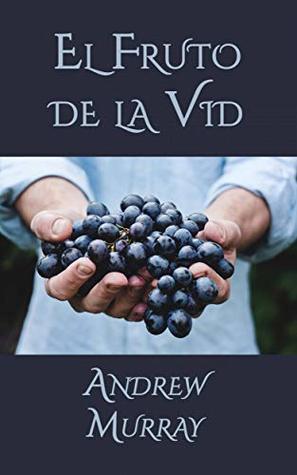
Una VID se planta únicamente por su fruto. Hay muchos tipos de vides, cada una con su tipo diferente de fruto. Cuando un agricultor planta una vid o un viñedo, selecciona ese tipo especial del cual desea obtener el fruto. El fruto será la manifestación de su propósito. Cuando Dios plantó la Vid Celestial, fue para que su fruto diera vida y fortaleza a los hombres moribundos. La misma vida de Dios, que el hombre había perdido por la caída, debía ser devuelta por Cristo desde el cielo; Cristo debía ser para los hombres el Verdadero Árbol de la Vida. En Él, lo Verdadero, la Vid Celestial, en Su Palabra y obra, en Su vida y muerte, la vida de Dios fue llevada al alcance de los hombres; todos los que comieran del fruto vivirían para siempre.Aún más maravilloso es que los discípulos de Cristo no solo deben comer y vivir sino que a su vez, se vuelven ramas frutales. La vida Divina que entra en ellos no solo debe morar en ellos, sino afirmar así su poder vivificador que debe mostrarse en el fruto que ellos tienen para sus semejantes. Tan verdaderamente como la Vid Celestial, todas sus ramas reciben la vida de Dios.






















Andrew Murray (1828 - 1917)
Brother Andrew Murray was a well-known writer/preacher in South Africa who ministered amongst the Dutch Reformed churches. His writings now are widely accepted by modern evangelicals and he is published more than ever in his life-time.Some of his better known books titles are: "Abide In Christ", "Absolute Surrender," and "Humility." His burden for the body of Christ were teachings on the abiding Spirit of Christ in the believer, the life of faith with God daily, and the life of intercession and prayer in the Church.
Andrew Murray was possibly the strongest spokesman of the Philadelphian age to expound the Body's necessity to abide in Christ, like the Apostle John before him.
Murray was born into a family of four children in the then remote Graaff-Reinet region (near the Cape) of South Africa. Educated in Scotland, which was followed by theological studies in Holland, Andrew returned to his native land to work as a missionary and minister. Given the daunting task of ministering to Bloemfontein, a remote region of 50,000 square miles and 12,000 people beyond the Orange River, Murray already began to sense the need to for the "deeper Christian life".
Though successful in preaching and bringing many to Christ, Murray found many of his greatest lessons in the School of Suffering, as will all who follow in the path of obedience.
Andrew Murray was one of four children born to Pastor Andrew, Sr., and Maria Murray. He was raised in what was considered to be the most remote corner of the world - Graaff-Reinet, South Africa. Educated in Scotland and Holland, in 1848 Andrew, Jr., returned to South Africa as a missionary and minister with the Dutch Reformed Church. His first appointment was to Bloemfontein, a territory of nearly 50,000 square miles and 12,000 people.
Andrew and his brother John had been in close contact with a revival movement in Scotland, an evangelical extension of the ongoing Second Great Awakening in America. He prayed for the same sort of awakening for the church in South Africa and wrote, "My prayer is for revival, but I am held back by the increasing sense of my own unfitness for the work. I lament the awful pride and self complacency that have till now ruled my heart. O that I may be more and more a minister of the Spirit." (J. du Plessis, The Life of Andrew Murray)
In 1860, revival did come to the churches of Cape Town, South Africa, and subsequently spread to surrounding towns and villages. Even remote farms and plantations felt the impact as lives were changed. Where once the churches had not been able to find one man ready to be a leader for God, the revival raised up 50 in Murray's Cape Town parish alone. There were more conversions in one month in that parish than in the whole course of its previous history. (Leona Choy, Andrew Murray: Apostle of Abiding Love)
Greatly concerned for the spiritual guidance of new converts and renewed Christians, Andrew Murray wrote over 240 books. His writings reflect his own longing for a deeper life in Christ and his prayer that others would long for and experience that life as well.
... Show more