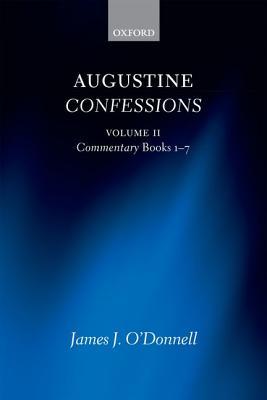
The Confessions of AugustineConfessions of Augustine have long both demanded and eluded the sustained and serious attention to detail that a scholarly commentary can provide. The present work, which is in three volumes, seeks to supplement that lack. A revised Latin text of the ConfessionsConfessions in Volume I forms the basis for a detailed line-by-line commentary (Volumes II-III) designed to elucidate the many layers of meaning in the work. Placing the emphasis primarily on exegesis, Professor O'Donnell opens up new lines of interpretation, as well as giving an abundance of fresh detail to some more familiar themes. At the same time, he clears the way for further scholarly work by furnishing the materials for others to draw on and press the task of interpretation further. A particular feature of the commentary is its attention to the influences in the ConfessionsConfessions of other texts of the Greek and Latin traditions - biblical, ecclesiastical, philosophical, and literary; whilst the place of the ConfessionsConfessions in Augustine's own life and in the history of Christian literature is also illuminated with greater precision.






















Aurelius Augustinus - more commonly "St. Augustine of Hippo," or simply "Augustine" - was a philosopher and theologian, and one of the most important figures in the development of Western Christianity. He framed the concepts of original sin and just war. Augustine was one of the most prolific Latin authors in terms of surviving works, and the list of his works consists of more than a hundred separate titles.
Augustine took the view that the Biblical text should not be interpreted literally if it contradicts what we know from science and our God-given reason. Many Protestants, especially Calvinists, consider him to be one of the theological fathers of Reformation teaching on salvation and divine grace.
... Show more