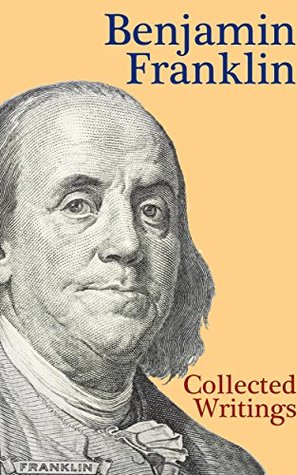
Benjamin Franklin (1706 – 1790) was one of the Founding Fathers of the United States. Franklin was a leading author, printer, political theorist, politician, postmaster, scientist, inventor, civic activist, statesman, and diplomat. As a scientist, Franklin was a major figure in the American Enlightenment and made discoveries and theories regarding electricity. As an inventor, he is known for the lightning rod, bifocals, and the Franklin stove..
Franklin earned the title of "The First American" for his early and indefatigable campaigning for colonial unity; as an author and spokesman in London for several colonies, then as the first United States Ambassador to France, he exemplified the emerging American nation
Collected here are the following works by Franklin:
• A Dissertation on Liberty and Necessity, Pleasure and Pain
• A Modest Enquiry into the Nature and Necessity of Paper Currency
• A Plan for Improving the Condition of the Free Blacks
• An Address to the Public
• Apology for Printers
• Autobiography of Benjamin Franklin
• Dialogue Between Franklin and the Gout
• Disapproving and accepting the Constitution
• Experiments And Observations On Electricity
• Franklin to Abbé Jean-Louis Giraud Soulavie
• Franklin to an Engraver in Paris
• Franklin to Benjamin Webb
• Last Will and Testament of Benjamin Franklin
• On State Representation
• Petition from the Pennsylvania Society for the Abolition of Slavery
• Rules By Which A Great Empire May Be Reduced To A Small One
• Silence Dogood, No. 1
• Silence Dogood, No. 2
• Silence Dogood, No. 3
• Silence Dogood, No. 4
• Silence Dogood, No. 5
• Silence Dogood, No. 6
• Silence Dogood, No. 7
• Silence Dogood, No. 8
• Silence Dogood, No. 9
• Silence Dogood, No. 10
• Silence Dogood, No. 11
• Silence Dogood, No. 12
• Silence Dogood, No. 13
• Silence Dogood, No. 14
• The Ephemera: An Emblem of Human Life
• The Whistle






















Benjamin Franklin was an important conservative figure in the American Restoration Movement, especially as the leading antebellum conservative in the northern United States branch of the movement. He is notable as the early and lifelong mentor of Daniel Sommer, whose support of the 1889 Sand Creek Declaration set in motion events which led to the formal division of the Churches of Christ from the Disciples of Christ in 1906.
According to contemporary biographies "His early religious training was according to the Methodist faith, though he never belonged to any church until he united with the Disciples."
In 1856, Franklin began to publish the ultra-conservative American Christian Review, which he published until his death in 1878. Its influence, initially considerable, was said to have waned following the American Civil War. Franklin undertook a rigorous program of publication correspondence, and traveling lectures which took him to "many" U. S. states and Canada.
Franklin's last move was to Anderson, Indiana, where he lived from 1864 until his death.
... Show more