
- Bíblia
- Leia a Bíblia
- Versões da Bíblia
- Verso do dia
- Planos de Leitura
- Versos por Tópico
- Books of the Bible
- Imagens bíblicas
- Estude
- Comentários
- Concordâncias
- Dicionários
- Enciclopédias
- Sermões
- Bible Atlas & Maps
- BP Wiki
- Devocionais
- Devocionais de hoje
- Light of the World
- Todos os devocionais
- Inspirational Quotes
- Mais
- Picture Quotes
- Videos
- Inspirador
- Estudo da Bíblia
- O que a Bíblia diz
- Bible Q&As
- Daily Bread
- Bible by Genre
- Bible Stories
- Random Bible Verse
- Comunidade
- Store
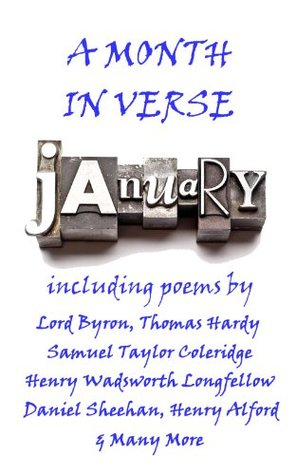
January, A Month In Verse
Poetry is a fascinating use of language. With almost a million words at its command it is not surprising that these Isles have produced some of the most beautiful, moving and descriptive verse through the centuries. In this series we look at each calendar month through the eyes and minds of our most gifted poets to bring you a guide to the days within each. This volume of Poetry is all about January - the first month of the year in our Gregorian calendar ushers in the New Year and promises new beginnings. The cold and bleak landscape of this winter month provides a rich background for our esteemed poets including Lord Byron, Henry Alford, Thomas Hardy, Daniel Sheehan, Emily Dickinson and Christina Georgina Rossetti. They amongst many others offer us their reflections and counterpoints. Many of the poems are also available as an audiobook from our sister company Portable Poetry read for you by, amongst others, Richard Mitchley and Ghizela Rowe. The full volume can be purchased from iTunes, Amazon and other digital stores. Many samples are at our youtube channel http://www.youtube.com/user/PortableP...
Poetry is a fascinating use of language. With almost a million words at its command it is not surprising that these Isles have produced some of the most beautiful, moving and descriptive verse through the centuries. In this series we look at each calendar month through the eyes and minds of our most gifted poets to bring you a guide to the days within each. This volume of Poetry is all about January - the first month of the year in our Gregorian calendar ushers in the New Year and promises new beginnings. The cold and bleak landscape of this winter month provides a rich background for our esteemed poets including Lord Byron, Henry Alford, Thomas Hardy, Daniel Sheehan, Emily Dickinson and Christina Georgina Rossetti. They amongst many others offer us their reflections and counterpoints. Many of the poems are also available as an audiobook from our sister company Portable Poetry read for you by, amongst others, Richard Mitchley and Ghizela Rowe. The full volume can be purchased from iTunes, Amazon and other digital stores. Many samples are at our youtube channel http://www.youtube.com/user/PortableP...http://www.youtube.com/user/PortableP...BUY NOW
Published September 24th 2013 by Portable Poetry
Obtenha o versículo bíblico diário todos os dias na sua caixa de entrada!
Leia no celular



Grupo de Marcas


















Henry Alford was an English churchman, theologian, textual critic, scholar, poet, hymnodist, and writer.
His chief fame rests on his monumental edition of the New Testament in Greek (4 vols.), which occupied him from 1841 to 1861. In this work he first produced a careful collation of the readings of the chief manuscripts and the researches of the ripest continental scholarship of his day. Philological rather than theological in character, it marked an epochal change from the old homiletic commentary, and though more recent research, patristic and papyral, has largely changed the method of New Testament exegesis, Alford's work is still a quarry where the student can dig with a good deal of profit.
Henry Alford, D.D., Dean of Canterbury, one of the most variously-accomplished churchmen of his day -- poet, preacher, painter, musician, biblical scholar, critic, and philologist -- came of a Somersetshire family, five generations of which, in direct succession, contributed clergymen of some distinction to the English Church. The earliest of these, his great-great-grandfather, Thomas, who died in 1708, was for many years the vicar of Curry Rivell, near Taunton -- a living that passed from one to another of his descendants.
Alford was a talented artist, as his picture-book, The Riviera (1870), shows, and he had abundant musical and mechanical talent. Besides editing the works of John Donne, he published several volumes of his own verse, The School of the Heart (1835), The Abbot of Muchelnaye (1841), The Greek Testament. The Four Gospels (1849), and a number of hymns, the best-known of which are "Forward! be our watchword," "Come, ye thankful people, come," and "Ten thousand times ten thousand."
His chief fame rests on his monumental edition of the New Testament in Greek (4 vols.), which occupied him from 1841 to 1861. In this work he first produced a careful collation of the readings of the chief manuscripts and the researches of the ripest continental scholarship of his day. Philological rather than theological in character, it marked an epochal change from the old homiletic commentary, and though more recent research, patristic and papyral, has largely changed the method of New Testament exegesis, Alford's work is still a quarry where the student can dig with a good deal of profit.
... Show more