St Jean Chrysostome, œuvres complètes, Traduction de l'abbé Bareille, 1865 - 1873.
Jean Chrysostome, né à Antioche entre 344 et 349. Il mort en 407, a été archevêque de Constantinople et l'un des pères de l'Église grecque. Son éloquence est à l'origine de son surnom de « Chrysostome » (Bouche d'or). Sa rigueur et son zèle réformateur l'ont conduit à l'exil et à la mort.
C'est un saint et un docteur de l'Église catholique et de l'Église orthodoxe.
Les écrits suivants sont inclus:
Apologie de la vie monastique
Traité du sacerdoce
Discours contre les Juifs
Homélies contre les Anoméens
Homélies sur Lazare
Homélies sur les statues
Homélies sur les démons
Homélies sur la pénitence
Éloge de saint Paul
Homélies I
Homélies II
Homélies III
Lettres
Homélies sur la Genèse
Discours sur la Genèse
Homélies sur Anne
Commentaire sur Isaie
Homélies sur Ozias ou touchant les séraphins
Homélies diverses contenues
synopse ou abrégé de l'ancien et du nouveau testament
Homélies sur Matthieu
Homélies sur Jean
Homélies sur Actes
Homélies sur Romains
Homélies sur 1 Corinthiens
Homélies sur 2 Corinthiens
Homélies sur Galates
Homélies sur Éphésiens
Homélies sur Philippiens
Homélies sur Colossiens
Homélies sur 1 et 2 Thessaloniciens
Homélies sur 1 et 2 Timothée
Homélies sur Tite
Homélies sur Philémon
Homélies sur Hébreux

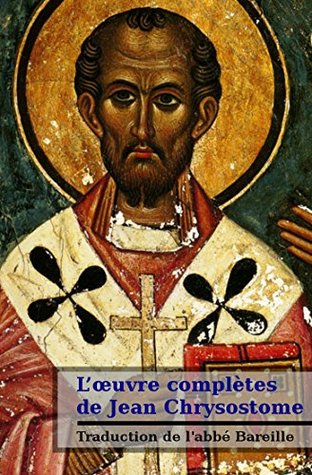





















John Chrysostom (349 - 407)
Read freely text sermons and articles by the speaker John Chrysostom in text and pdf format Archbishop of Constantinople, was an important Early Church Father. He is known for his preaching and public speaking, his denunciation of abuse of authority by both ecclesiastical and political leaders, the Divine Liturgy of St. John Chrysostom, and his ascetic sensibilities. The epithet Χρυσόστομος (Chrysostomos, anglicized as Chrysostom) means "golden-mouthed" in Greek and given for his celebrated eloquence.The Eastern Orthodox and Byzantine Catholic churches honor him as a saint and count him among the Three Holy Hierarchs, together with Basil the Great and Gregory Nazianzus. He is recognized by the Eastern Orthodox Church and the Catholic Church as a saint and as a Doctor of the Church. Churches of the Western tradition, including the Roman Catholic Church, some Anglican provinces, and some Lutheran churches, commemorate him on 13 September. Some other Lutheran churches and Anglican provinces commemorate him on the traditional Eastern feast day of 27 January. Chrysostom's extant homiletical works are vast, including many hundreds of exegetical homilies on both the New Testament (especially the works of Saint Paul) and the Old Testament (particularly on Genesis). Among his extant exegetical works are sixty-seven homilies on Genesis, fifty-nine on the Psalms, ninety on the Gospel of Matthew, eighty-eight on the Gospel of John, and fifty-five on the Acts of the Apostles.
John Chrysostom, Archbishop of Constantinople, was an important Early Church Father. He is known for his eloquence in preaching and public speaking, and his denunciation of abuse of authority by both ecclesiastical and political leaders.
Chrysostom is known in Christianity chiefly as a preacher, theologian and liturgist, particularly in the Eastern Orthodox Church.
During a time when city clergy were subject to criticism for their high lifestyle, John was determined to reform his clergy in Constantinople. These efforts were met with resistance and limited success. He was an excellent preacher. As a theologian, he has been and continues to be very important in Eastern Christianity, and is generally considered the most prominent doctor of the Greek Church, but has been less important to Western Christianity.
His writings have survived to the present day more so than any of the other Greek Fathers. He rejected the contemporary trend for allegory, instead speaking plainly and applying Bible passages and lessons to everyday life.
... Show more