
Quote by Robert Anderson

“I was about to lose one of my biggest accounts, Walgreens, the people I had created a tremendous amount of business for and to whom I was selling five million cups a year. Fred Stoll told me in strictest confidence that a former Walgreen executive who had a lot of pull in the top offices of the company had gone into the paper cup business with a competitor of mine, and he was going to be given all of the Walgreen trade. The rationale would be that this competitor was selling for five percent under my price. I explained this to John Clark and tried to get him to go along with offering Walgreens a price break—after all, they paid their bills on time and there was promotion value in having a big company like that use your product. But all I got was a tongue lashing.”
Be the first to react on this!



Grupo de Marcas


















© 2025 Bibleportal.com Todos os direitos reservados.
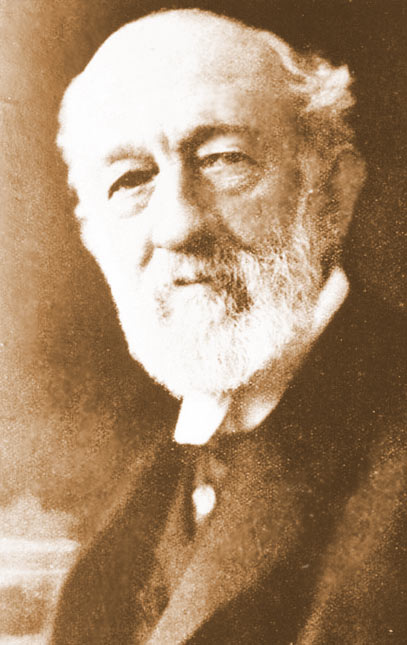
Sir Robert Anderson was born in Dublin, Ireland and was of Scottish descent. His father was an elder in the Irish Presbyterian Church and he was raised in a religious home. Anderson's conversion took place after listening to a sermon delivered by John Hall.
Sir Robert Anderson graduated from Trinity College, Dublin, in 1862 and was called to the Irish Bar in 1863. He later became Assistant Commissioner of the Metropolitan Police and Chief of the Criminal Investigation Department at Scotland Yard. When he retired in 1901, he was made Knight Commander of the the Order of the Bath. W. H. Smith, on the floor of the House of Commons, said Sir Robert "had discharged his duties with great ability and perfect faithfulness to the public."
Sir Robert Anderson was the chief inspector for Scotland Yard. He was greatly respected for his skill as an investigator. When Anderson wasn't writing on subjects related to crime, he wrote books on Christian prophecy. He helped establish the fact that 69 of Daniel's 70 weeks have now transpired, and that the tribulation will be the 70th week. Sir Robert Anderson's book, The Coming Prince, has become a foundational resource for all dispensationalists.