
Quote by George Washington

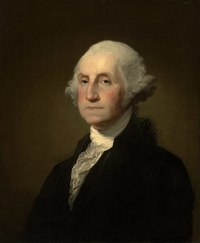
“Of all the dispositions and habits which lead to political prosperity, religion and morality are indispensable supports. In vain would that man claim the tribute of patriotism, who should labor to subvert these great pillars of human happiness, these firmest props of the duties of men and citizens. The mere politician, equally with the pious man, ought to respect and to cherish them. A volume could not trace all their connections with private and public felicity. Let it simply be asked: Where is the security for property, for reputation, for life, if the sense of religious obligation desert the oaths which are the instruments of investigation in courts of justice? And let us with caution indulge the supposition that morality can be maintained without religion. Whatever may be conceded to the influence of refined education on minds of peculiar structure, reason and experience both forbid us to expect that national morality can prevail in exclusion of religious principle.”
Be the first to react on this!



Grupo de Marcas


















© 2025 Bibleportal.com Todos os direitos reservados.
George Washington was the commander of the Continental Army in the American Revolutionary War (1775-1783) and served as the first President of the United States of America (1789-1797). For his central role in the formation of the United States, he is often referred to as the father of his country.
Washington was baptized into the Church of England. In 1765, when the Church of England was still the state religion, he served on the vestry (lay council) for his local church. Throughout his life, he spoke of the value of righteousness, and of seeking and offering thanks for the "blessings of Heaven."
The Electoral College elected Washington unanimously in 1789, and again in the 1792 election; he remains the only president to receive 100% of the electoral votes.
Washington proved an able administrator. An excellent delegator and judge of talent and character, he held regular cabinet meetings to debate issues before making a final decision. In handling routine tasks, he was "systematic, orderly, energetic, solicitous of the opinion of others but decisive, intent upon general goals and the consistency of particular actions with them.
Washington died in 1799. He has been consistently ranked by scholars as one of the greatest U.S. Presidents.