
Quote by Herman Bavinck

“The law, which was added to the promise, did not render the promise of no effect or obliterate it, but rather took the promise up into itself in order to be of service to the development and fulfillment of it. The promise is the main thing; the law is subordinate. The first is the goal; the second is the means. It is not in the law, but in the promise, that the core of the Revelation of God and the heart of Israel's religion lies. And because the promise is a promise of God, it is not a hollow sound, but a word full of power, which is the expression of a will bent on doing all that pleases God (Ps. 33:9 and Isa. 55:11). Therefore, this promise is the propelling force of Israel's history until it gets its fulfillment in Christ.”
Be the first to react on this!



Grupo de Marcas


















© 2025 Bibleportal.com Todos os direitos reservados.
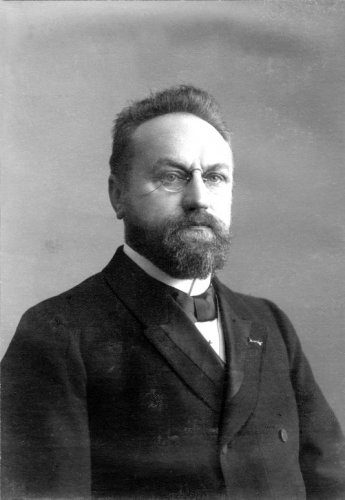
Born on December 13, 1854, in Hoogeveen, Drenthe, Holland, Herman Bavinck was the son of the Reverend Jan Bavinck, a leading figure in the secession from the State Church of the Netherlands in 1834. After theological study in Kampen, and at the University of Leiden, he graduated in 1880, and served as the minister of the congregation at Franeker, Friesland, for a year. According to his biographers, large crowds gathered to hear his outstanding exposition of the Scriptures.
In 1882, he was appointed a Professor of theology at Kampen, and taught there from 1883 until his appointment, in 1902, to the chair of systematic Theology in the Free University of Amsterdam, where he succeeded the great Abraham Kuyper, then recently appointed Prime Minister of the Netherlands. In this capacity -- an appointment he had twice before declined -- Bavinck served until his death in 1921.