
Quote by Robert Anderson

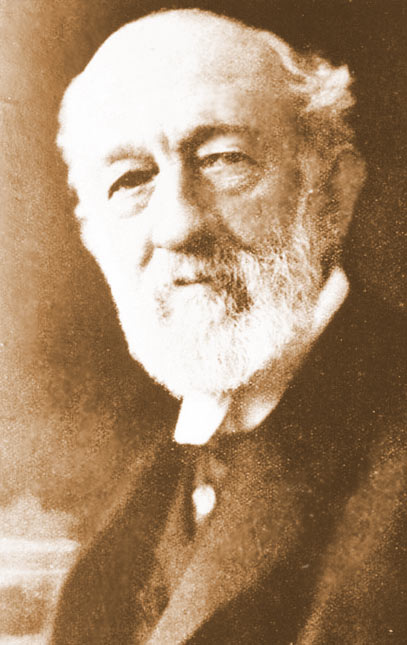
“The only thing I really enjoyed about school was debating. Here was an activity I could get my teeth into—figuratively, of course—but I would not have hesitated to bite a debate opponent if it would have advanced my argument. I loved being the center of attention, persuading the audience that my side was right. One debate that I remember in particular was on the question “Should Smoking Be Abolished?” As happened more often than not, I was on the side of the underdogs, trying to defend smoking. It was a very spirited exchange, but my opponents made the mistake of painting the demon tobacco too black, too vile, too evil to be countenanced by a sane society.”
Be the first to react on this!



Grupo de Marcas


















© 2025 Bibleportal.com Todos os direitos reservados.
Sir Robert Anderson was born in Dublin, Ireland and was of Scottish descent. His father was an elder in the Irish Presbyterian Church and he was raised in a religious home. Anderson's conversion took place after listening to a sermon delivered by John Hall.
Sir Robert Anderson graduated from Trinity College, Dublin, in 1862 and was called to the Irish Bar in 1863. He later became Assistant Commissioner of the Metropolitan Police and Chief of the Criminal Investigation Department at Scotland Yard. When he retired in 1901, he was made Knight Commander of the the Order of the Bath. W. H. Smith, on the floor of the House of Commons, said Sir Robert "had discharged his duties with great ability and perfect faithfulness to the public."
Sir Robert Anderson was the chief inspector for Scotland Yard. He was greatly respected for his skill as an investigator. When Anderson wasn't writing on subjects related to crime, he wrote books on Christian prophecy. He helped establish the fact that 69 of Daniel's 70 weeks have now transpired, and that the tribulation will be the 70th week. Sir Robert Anderson's book, The Coming Prince, has become a foundational resource for all dispensationalists.