
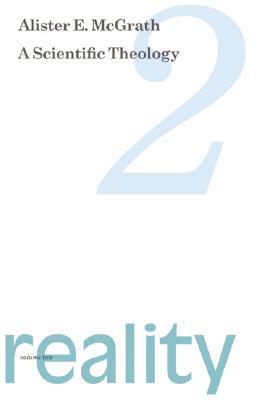
Scientific Theology: Volume 2: Reality
by Alister McGrath
A groundbreaking work by one of the world's bestknown theologians, "A Scientific Theology "is the most extended and systematic exploration of the relation between theology and science ever undertaken. Drawing on both his firsthand experience with scientific research and his vast knowledge of the Christian tradition, Alister McGrath in these three volumes sets forth an approach to theology that positively engages the natural sciences while maintaining the legitimacy of theology as an academic discipline in its own right.In Volume 2 McGrath provides a detailed and thorough defense of theological realism, setting this perspective against the backdrop of radical changes in Western philosophy and theology. Engaging critically with writers such as George Lindbeck and John Milbank, McGrath offers a sparkling and sophisticated affirmation of theological realism, challenging head-on counterarguments lodged by its modern and postmodern critics. His refutation of the claim that the rise of philosophical nonfoundationalism entails the abandoning of any form of realism is of particular importance, as is his application of the highly influential form of "critical realism" developed by Roy Bhaskar.
BUY NOW
Hardcover, 343 pages
Published December 4th 2002 by William B. Eerdmans Publishing Company (first published November 1st 2002)



品牌集团


















© 2025 Bibleportal.com 版权所有.
Alister Edgar McGrath is a Christian theologian and apologist, who holds both a PhD (in molecular biophysics) and an earned Doctor of Divinity degree from Oxford. He is noted for his work in historical, systematic and scientific theology. He was formerly an atheist.
In his writing and public speaking, he promotes "scientific theology" and opposes antireligionism. McGrath was until recently Professor of Historical Theology at the University of Oxford, but has now taken up the chair of Theology, Religion and Culture at King's College London since September 2008. Until 2005, he was principal of Wycliffe Hall.
McGrath is a prolific writer. His work often refers both to the early Church Fathers and to contemporary evangelical stalwarts such as Thomas Torrance and J. I. Packer. His areas of expertise include doctrine, Church history, the interaction of science and faith, and evangelical spirituality.
In 2005 he resigned as Principal of Wycliffe Hall, whilst remaining President of the Oxford Centre for Christian Apologetics which was based there.
... Show more