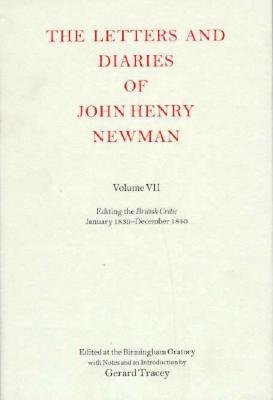
John Henry Newman (1801-90) was at the height of his position in the Church of England in 1839, when he first began to feel doubts concerning the claims of the Anglican Church. His editorship of the British CriticBritish Critic took up a great deal of time, but he was greatly encouraged by its increasing
sales. Uncomfortable with his position as Vicar of St Mary's, Oxford Newman was considering giving up the position at the end of 1840. This volume covers a significant period in Newman's life, with a background of social ferment and political tension: the Corn Laws, Chartism, an inexperienced
monarch, weak government, and foreign problems. Contemporary writers such as Carlyle attracted Newman's attention, and university reform was a live issue.






















John Henry Newman was a Roman Catholic priest and cardinal who converted to Roman Catholicism from Anglicanism in October 1845. In early life, he was a major figure in the Oxford Movement to bring the Church of England back to its Catholic roots.
Eventually his studies in history persuaded him to become a Roman Catholic. Both before and after becoming a Roman Catholic, he wrote a number of influential books.
... Show more