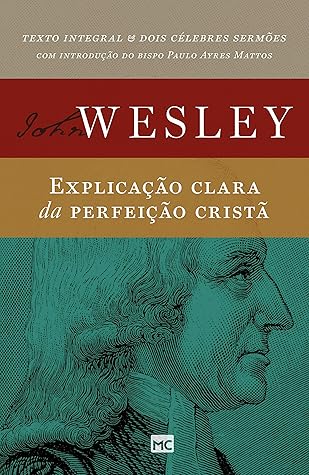
Explicação clara da perfeição cristã é uma obra histórica e essencial para compreender a teologia de John Wesley, fundador do metodismo. Sua primeira edição data de 1766 e teve papel fundamental para deter a “controvérsia perfeccionista” que ameaçava a sobrevivência do avivamento metodista.
Nesta edição especial, a Editora Mundo Cristão proporciona ao leitor o texto
integral de Wesley, além de dois célebres sermões sobre o tema da perfeição cristã. Destaca-se, ainda, uma introdução escrita com a pena caprichosa e detalhada de Paulo Ayres, profundo conhecedor do metodismo, que situa a obra no contexto da história do movimento e oferece detalhes importantes da vida de seu fundador.






















John Wesley (1703 - 1791)
Was an Anglican cleric and Christian theologian. Wesley is largely credited, along with his brother Charles Wesley, as founding the Methodist movement which began when he took to open-air preaching in a similar manner to George Whitefield. In contrast to Whitefield's Calvinism, Wesley embraced the Arminian doctrines that were dominant in the 18th-century Church of England. Methodism in both forms became a highly successful evangelical movement in Britain, which encouraged people to experience Jesus Christ personally.Wesley helped to organise and form societies of Christians throughout Great Britain, North America and Ireland as small groups that developed intensive, personal accountability, discipleship and religious instruction among members. His great contribution was to appoint itinerant, unordained preachers who travelled widely to evangelise and care for people in the societies. Under Wesley's direction, Methodists became leaders in many social issues of the day, including the prison reform and abolitionism movements.
John Wesley was an Anglican cleric and Christian theologian. Wesley is largely credited, along with his brother Charles Wesley, with founding the Methodist movement which began when he took to open-air preaching in a similar manner to George Whitefield. In contrast to George Whitefield's Calvinism (which later led to the forming of the Calvinistic Methodists), Wesley embraced Arminianism. Methodism in both forms was a highly successful evangelical movement in the United Kingdom, which encouraged people to experience Christ personally.
Wesley believed that this doctrine should be constantly preached, especially among the people called Methodists. In fact, he contended that the purpose of the Methodist movement was to "spread scriptural holiness across England."
Throughout his life, Wesley remained within the Church of England and insisted that his movement was well within the bounds of the Anglican tradition. His maverick use of church policy put him at odds with many within the Church of England, though toward the end of his life he was widely respected.
John Wesley was the founder of the Methodist movement which grew from the 'Holy Club' of his Oxford friends into a great religious revival. An indefatigable traveller, preacher and writer, Wesley averaged 8,000 miles a year on horseback and gave 15 sermons a week. The reluctance of the Anglican clergy to lend him their pulpits led him to give some of his sermons in the open air, a decision which enabled him to reach those among the poorer sections of society who were not accustomed to going to church.
... Show more