
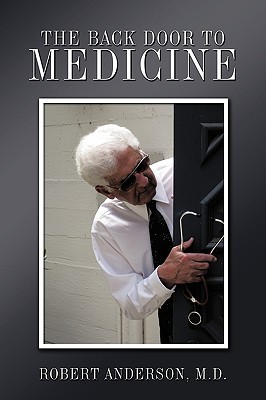
The Back Door to Medicine: An Embedded Anthropologist Tells All
by Robert Anderson
An anthropologist typically does research by immersing oneself in a society, learning the language if need be, spending a year or two observing, asking questions, getting involved, photographing, videotaping, and writing copious notes on how people live their lives; in other words, on how they experience and manifest their culture. Anthropologists call that method "participant observation," and the goal is to produce a cultural description that can be shared with any and all who might be interested. This book describes three cultures in a single, integrated narrative. For one, it offers a case study of the culture of anthropology itself as it records how I experienced ethnographic research as both a method and a way of life.
My original goal was to describe the culture of chiropractic as a prominent and important field of alternative medicine. As is common in anthropology, that seemingly straight-forward objective detoured in an unanticipated direction. I accomplished my purpose by graduating from a chiropractic college as a Doctor of Chiropractic (D.C.).
Still another unanticipated diversion in this complex ethnographic adventure led to medical school, but not in an accredited institution in the United States. Taking a leave of absence from my professorship at Mills College, I eventually graduated from a Mexican medical school as a Doctor of Medicine (M.D.). I earned qualifications in medicine and surgery by entering the profession through a back door.
My original goal was to describe the culture of chiropractic as a prominent and important field of alternative medicine. As is common in anthropology, that seemingly straight-forward objective detoured in an unanticipated direction. I accomplished my purpose by graduating from a chiropractic college as a Doctor of Chiropractic (D.C.).
Still another unanticipated diversion in this complex ethnographic adventure led to medical school, but not in an accredited institution in the United States. Taking a leave of absence from my professorship at Mills College, I eventually graduated from a Mexican medical school as a Doctor of Medicine (M.D.). I earned qualifications in medicine and surgery by entering the profession through a back door.
BUY NOW
Paperback, 276 pages
Published October 2nd 2009 by iUniverse



品牌集团


















© 2025 Bibleportal.com 版权所有.
Sir Robert Anderson was born in Dublin, Ireland and was of Scottish descent. His father was an elder in the Irish Presbyterian Church and he was raised in a religious home. Anderson's conversion took place after listening to a sermon delivered by John Hall.
Sir Robert Anderson graduated from Trinity College, Dublin, in 1862 and was called to the Irish Bar in 1863. He later became Assistant Commissioner of the Metropolitan Police and Chief of the Criminal Investigation Department at Scotland Yard. When he retired in 1901, he was made Knight Commander of the the Order of the Bath. W. H. Smith, on the floor of the House of Commons, said Sir Robert "had discharged his duties with great ability and perfect faithfulness to the public."
Sir Robert Anderson was the chief inspector for Scotland Yard. He was greatly respected for his skill as an investigator. When Anderson wasn't writing on subjects related to crime, he wrote books on Christian prophecy. He helped establish the fact that 69 of Daniel's 70 weeks have now transpired, and that the tribulation will be the 70th week. Sir Robert Anderson's book, The Coming Prince, has become a foundational resource for all dispensationalists.
... Show more