
Quote by Thomas Aquinas

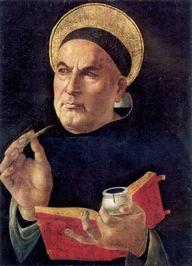
“A thing may be in order and ready to act in one way, and out of order and unready in another. Thus a blind man has his walking power in order and is able to walk: but wanting sight to guide his steps, his walking suffers defect in that he goes stumbling.”
topics: oförutsägbarhet
Be the first to react on this!



品牌集团


















© 2025 Bibleportal.com 版权所有.
Thomas Aquinas was an immensely influential philosopher and theologian in the tradition of scholasticism, known as Doctor Angelicus and Doctor Communis.
He was the foremost classical proponent of natural theology, and the father of the Thomistic school of philosophy and theology. His influence on Western thought is considerable, and much of modern philosophy was conceived as a reaction against, or as an agreement with, his ideas, particularly in the areas of ethics, natural law and political theory.
The philosophy of Aquinas has exerted enormous influence on subsequent Christian theology, especially that of the Roman Catholic Church, extending to Western philosophy in general, where he stands as a vehicle and modifier of Aristotelianism, which he fused with the thought of Augustine.