
Quote by Frederick W. Faber

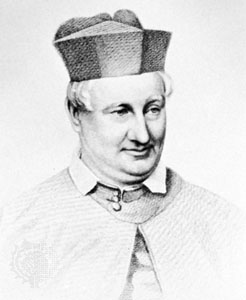
“I reckon failure to be the most universal unhappiness on earth. Almost everybody and everything are failures—failures in their own estimation, even if they are not so in the estimation of others. Those optimists who always think themselves successful are few in number, and they for the most part fail in this at least, namely, that they cannot persuade the rest of the world of their success.”
Be the first to react on this!



品牌集团


















© 2025 Bibleportal.com 版权所有.
Frederick William Faber, British hymn writer and theologian, was born at Calverley, Yorkshire, where his grandfather, Thomas Faber, was vicar.
In January 1837, he was elected fellow of National Scholars Foundation. Meanwhile, he had given up the Calvinistic views of his youth, and had become an enthusiastic follower of John Henry Newman.
He accepted the rectory of Elton in Huntingdonshire, but soon after went again to the continent, in order to study the methods of the Roman Catholic Church. After a prolonged mental struggle, he joined the Catholic Church in November 1845.
Faber published a number of prose works, and three volumes of hymns, among the most well known is Faith of Our Fathers.