
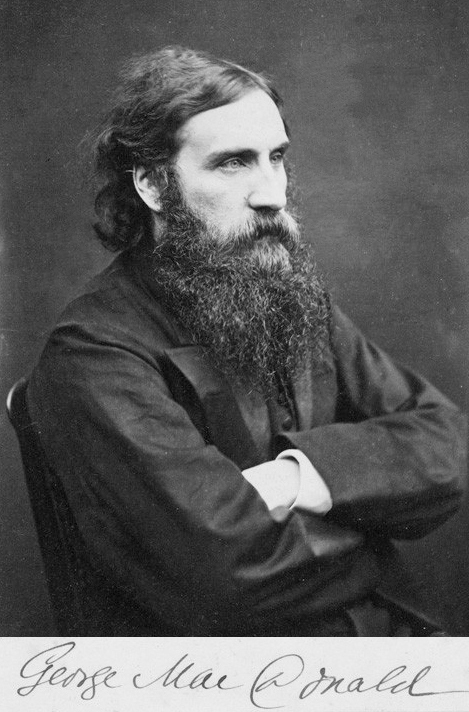
Quote by George MacDonald

“Love is one, and love is changeless. For love loves unto purity. Love has ever in view the absolute loveliness of that which it beholds. Where loveliness is incomplete, and love cannot love its fill of loving, it spends itself to make more lovely, that it may love more; it strives for perfection, even that itself may be perfected–not in itself, but in the object. As it was love that first created humanity, so even human love, in proportion to its divinity, will go on creating the beautiful for its own outpouring. There is nothing eternal but that which loves and can be loved, and love is ever climbing towards the consummation when such shall be the universe, imperishable, divine. Therefore all that is not beautiful in the beloved, all that comes between and is not of love’s kind, must be destroyed. And our God is a consuming fire.”
Be the first to react on this!



品牌集团


















© 2025 Bibleportal.com 版权所有.
George MacDonald was a Scottish author, poet, and Christian minister.
Known particularly for his poignant fairy tales and fantasy novels, George MacDonald inspired many authors, such as W. H. Auden, J. R. R. Tolkien, C. S. Lewis, E. Nesbit and Madeleine L'Engle. G. K. Chesterton cited The Princess and the Goblin as a book that had "made a difference to my whole existence."
Even Mark Twain, who initially disliked MacDonald, became friends with him, and there is some evidence that Twain was influenced by MacDonald.
MacDonald grew up influenced by his Congregational Church, with an atmosphere of Calvinism. But MacDonald never felt comfortable with some aspects of Calvinist doctrine; indeed, legend has it that when the doctrine of predestination was first explained to him, he burst into tears (although assured that he was one of the elect). Later novels, such as Robert Falconer and Lilith, show a distaste for the idea that God's electing love is limited to some and denied to others.