
Quote by G.K. Chesterton

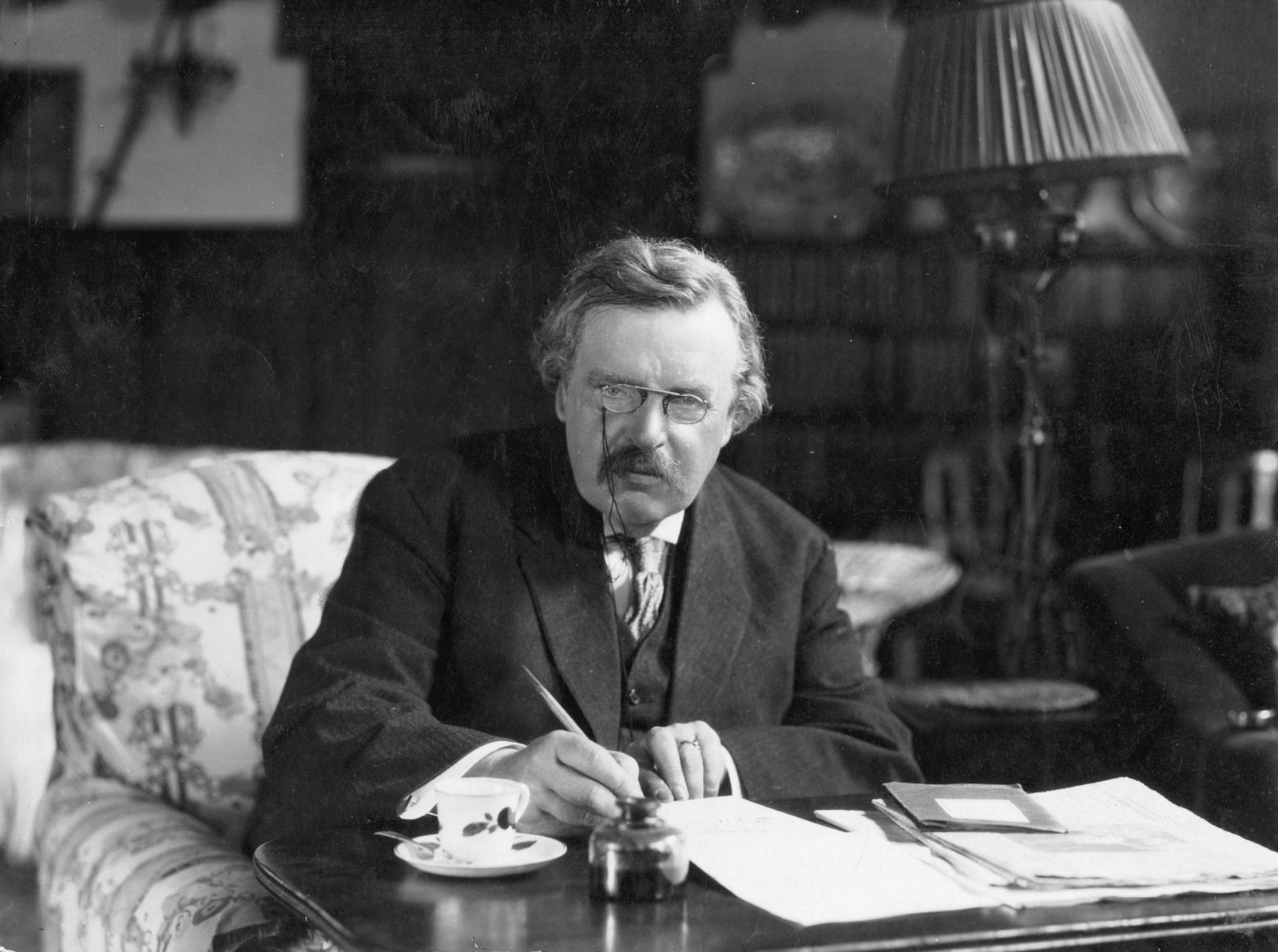
“To the Buddhist or the eastern fatalist, existence is a science or a plan, which must end up in a certain way. But to a Christian, existence is a STORY, which may end up in any way. In a thrilling novel (that purely Christian product) the hero is not eaten by cannibals; but it is essential to the existence of the thrill that he MIGHT be eaten by cannibals. The hero must (so to speak) be an eatable hero. So Christian morals have always said to the man, not that he would lose his soul, but that he must take care that he didn't. In Christian morals, in short, it is wicked to call a man "damned": but it is strictly religious and philosophic to call him damnable. All Christianity concentrates on the man at the cross-roads. The vast and shallow philosophies, the huge syntheses of humbug, all talk about ages and evolution and ultimate developments. The true philosophy is concerned with the instant. Will a man take this road or that? - that is the only thing to think about, if you enjoy thinking.”
― G.K. Chesterton ,
from Orthodoxy
Be the first to react on this!



品牌集团


















© 2025 Bibleportal.com 版权所有.
Gilbert Keith Chesterton was one of the most influential English writers of the 20th century. His prolific and diverse output included journalism, philosophy, poetry, biography, Christian apologetics, fantasy and detective fiction.
Chesterton has been called the "prince of paradox". Time magazine, in a review of a biography of Chesterton, observed of his writing style: "Whenever possible Chesterton made his points with popular sayings, proverbs, allegories—first carefully turning them inside out.