
Inspirational Quotes on Epistemology

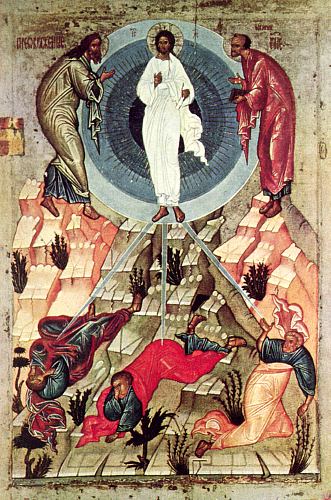
“Foreknowledge cannot be gotten from ghosts and spirits, cannot be had by analogy, cannot be found out by calculation. It must be obtained from people, people who know the conditions of the enemy.”

“I do not think there is a demonstrative proof (like Euclid) of Christianity, nor of the existence of matter, nor of the good will and honesty of my best and oldest friends. I think all three are (except perhaps the second) far more probable than the alternatives. The case for Christianity in general is well given by Chesterton…As to why God doesn't make it demonstratively clear; are we sure that He is even interested in the kind of Theism which would be a compelled logical assent to a conclusive argument? Are we interested in it in personal matters? I demand from my friend trust in my good faith which is certain without demonstrative proof. It wouldn't be confidence at all if he waited for rigorous proof. Hang it all, the very fairy-tales embody the truth. Othello believed in Desdemona's innocence when it was proved: but that was too late. Lear believed in Cordelia's love when it was proved: but that was too late. 'His praise is lost who stays till all commend.' The magnanimity, the generosity which will trust on a reasonable probability, is required of us. But supposing one believed and was wrong after all? Why, then you would have paid the universe a compliment it doesn't deserve. Your error would even so be more interesting and important than the reality. And yet how could that be? How could an idiotic universe have produced creatures whose mere dreams are so much stronger, better, subtler than itself?”

“If one does not make human knowledge wholly dependent upon the original self-knowledge and consequent revelation of God to man, then man will have to seek knowledge within himself as the final reference point. Then he will have to seek an exhaustive understanding of reality. He will have to hold that if he cannot attain to such an exhaustive understanding of reality he has no true knowledge of anything at all. Either man must then know everything or he knows nothing. This is the dilemma that confronts every form of non-Christian epistemology”
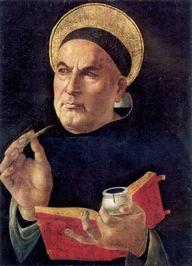
“knowledge depends on the mode of the knower; for what is known is in the knower according to the measure of his mode”

“Nothing can be known either of God or man until God has become man in Jesus Christ.”
― Dietrich Bonhoeffer ,
from Christ the Center
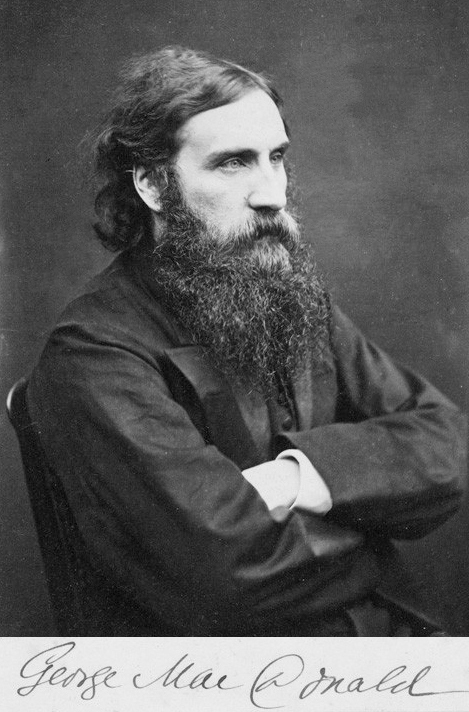
“Thou doubtest because thou lovest the truth. Some would willingly believe life but a phantasm, if only it might for ever afford them a world of pleasant dreams: thou art not of such! Be content for a while not to know surely. The hour will come, and that ere long, when, being true, thou shalt behold the very truth, and doubt will be for ever dead. Scarce, then, wilt thou be able to recall the features of the phantom. Thou wilt then know that which thou canst not now dream. Thou hast not yet looked the Truth in the face, hast as yet at best but seen him through a cloud. That which thou seest not, and never didst see save in a glass darkly—that which, indeed, never can be known save by its innate splendour shining straight into pure eyes—that thou canst not but doubt, and art blameless in doubting until thou seest it face to face, when thou wilt no longer be able to doubt it.”
― George MacDonald ,
from Lilith
“Ye cannot know eternal reality by a definition.”
― C.S. Lewis ,
from The Great Divorce

“I do not believe for a moment that if the men back at that point in history had had the philosophy, the epistemology of modern man, there would ever have been modern science. I also think science as we know it is going to die. I think it is going to be reduced to two things: mere technology, and another form of sociological manipulation. I do not believe for a moment that science is going to be able to continue with its objectivity once the base that brought forth science has been totally destroyed, and since the hope of positivism as a base has also been destroyed.”

“Science involves the quest for knowledge. Any such quest, by necessity, involves some commitment to epistemology. The epistemology of irrationalism is fatal to all science because it makes knowledge of anything impossible. If a truth’s contrary can also be true, no truth about anything can possibly be known.”
topics: analytically-false , epistemology , knowledge , law-of-non-contradiction , science , search-for-truth , truth



品牌集团


















© 2026 Bibleportal.com 版权所有.