
Inspirational Quotes on Catholicism

“It is reasonable to love the Absolute absolutely for the same reason it is reasonable to love the relative relatively.”
― Peter Kreeft ,
from Jesus-Shock
topics: absolute , absolutism , catholicism , christianity , god , jesus-shock , love , philosophy , reasonable , relativism , spirituality , theology
“Like apes, we breed, sleep, and die. Yet like God we say, "I am." We are ontological oxymorons.”
― Peter Kreeft ,
from Jesus-Shock
topics: catholicism , christianity , god , jesus-shock , ontological-oxymoron , ontology , oxymoron , philosophy , spirituality , theology
“The connection between art and Christ is like the connection between sunlight and the sun. It is, in fact, the connection between Sonlight and the Son.”
― Peter Kreeft ,
from Jesus-Shock
topics: art , catholicism , christ , christianity , god , jesus , jesus-christ , jesus-shock , philosophy , son-of-god , sonlight , spirituality , sun , sunlight , theology
“Only God may be adored, because only God is unlimited goodness, truth, and beauty, and thus only God deserves unlimited love.”
― Peter Kreeft ,
from Jesus-Shock
topics: adore , beauty , catholicism , christianity , god , goodness , inspirational , jesus-shock , love , philosophy , spirituality , theology , truth , unlimited-beauty , unlimited-goodness , unlimited-love , unlimited-truth
“God gives us not only the truth but also the ability to believe it; not only the new thing to see but also the new eye to see it with.”
― Peter Kreeft ,
from Jesus-Shock
topics: catholicism , christianity , faith , god , jesus-shock , philosophy , spirituality , theology , truth
“It is closer to the truth to say that God is crazy than that God is reasonable. I suspect God merely smiles when someone calls him crazy, but shakes His head and frowns when someone calls Him reasonable.”
― Peter Kreeft ,
from Jesus-Shock
topics: catholicism , christianity , crazy , god , jesus-shock , philosophy , reasonable , spirituality , theology
“Most theists are deists most of the time, in practice if not in theory. They practice the absence of God instead of the presence of God.”
― Peter Kreeft ,
from Jesus-Shock
topics: absence-of-god , catholicism , christianity , deism , deist , god , jesus-shock , philosophy , presence-of-god , theism , theist , theology

“When God laughs at the soul and the soul laughs back at God, the persons of the Trinity are begotten. When the Father laughs at the Son and the Son laughs back at the Father, that laughter gives pleasure, that pleasure gives joy, that joy gives love, and that love is the Holy Spirit.”
topics: catholic , catholicism , christian , christianity , god , holy-spirit , holy-trinity , joy , laughter , love , pleasure , religion , soul
“The rich fop Francis of Assisi was bored all his life―until he fell in love with Christ and gave all his stuff away and became the troubadour of Lady Poverty.”
― Peter Kreeft ,
from Jesus-Shock
topics: boredom , catholicism , christ , christianity , francis-of-assisi , jesus-shock , lady-poverty , philosophy , saint-francis , st-francis-of-assisi , theology , troubadour
“Manifest in this trade (commercial sale of indulgences via bankers) at the same time was a pernicious tendency in the Roman Catholic system, for the trade in indulgences was not an excess or an abuse but the direct consequence of the nomistic degradation of the gospel. That the Reformation started with Luther’s protest against this traffic in indulgences proves its religious origin and evangelical character. At issue here was nothing less than the essential character of the gospel, the core of Christianity, the nature of true piety. And Luther was the man who, guided by experience in the life of his own soul, again made people understand the original and true meaning of the gospel of Christ. Like the “righteousness of God,” so the term “penitence” had been for him one of the most bitter words of Holy Scripture. But when from Romans 1:17 he learned to know a “righteousness by faith,” he also learned “the true manner of penitence.” He then understood that the repentance demanded in Matthew 4:17 had nothing to do with the works of satisfaction required in the Roman institution of confession, but consisted in “a change of mind in true interior contrition” and with all its benefits was itself a fruit of grace. In the first seven of his ninety-five theses and further in his sermon on “Indulgences and Grace” (February 1518), the sermon on “Penitence” (March 1518), and the sermon on the “Sacrament of Penance” (1519), he set forth this meaning of repentance or conversion and developed the glorious thought that the most important part of penitence consists not in private confession (which cannot be found in Scripture) nor in satisfaction (for God forgives sins freely) but in true sorrow over sin, in a solemn resolve to bear the cross of Christ, in a new life, and in the word of absolution, that is, the word of the grace of God in Christ. The penitent arrives at forgiveness of sins, not by making amends (satisfaction) and priestly absolution, but by trusting the word of God, by believing in God’s grace. It is not the sacrament but faith that justifies. In that way Luther came to again put sin and grace in the center of the Christian doctrine of salvation. The forgiveness of sins, that is, justification, does not depend on repentance, which always remains incomplete, but rests in God’s promise and becomes ours by faith alone.”
“It is absurd and a detestable shame, that we should suffer those traditions to be changed which we have received from the fathers of old.”
“It is very useful for those who minister the word of God, or give themselves up to prayer, to read the works of authors whose names begin with S, such as Saint Augustine, Saint Bernard, &c”
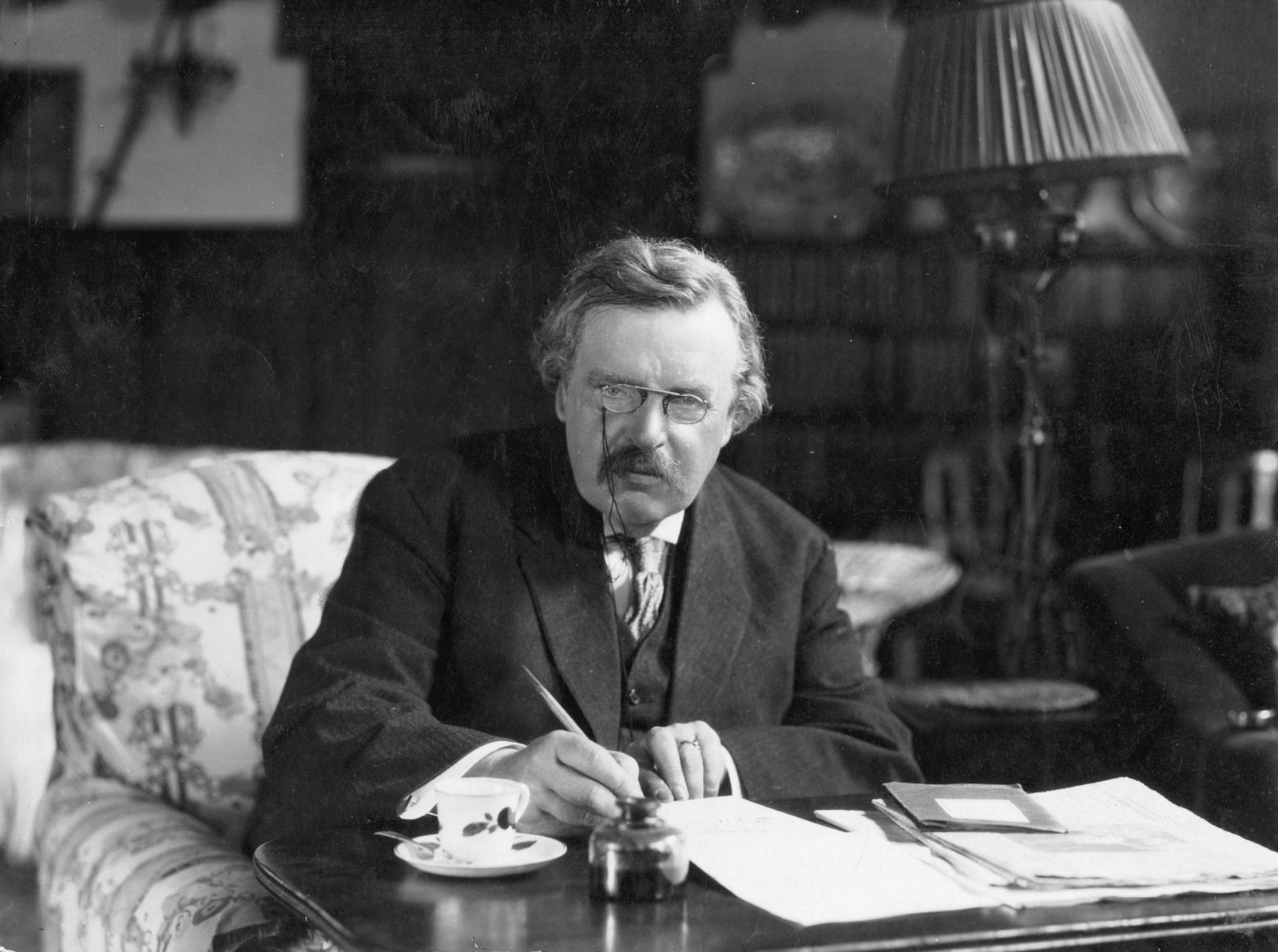
“But the truth is that there is no more conscious inconsistency between the humility of a Christian and the rapacity of a Christian than there is between the humility of a lover and the rapacity of a lover. The truth is that there are no things for which men will make such herculean efforts as the things of which they know they are unworthy. There never was a man in love who did not declare that, if he strained every nerve to breaking, he was going to have his desire. And there never was a man in love who did not declare also that he ought not to have it.”
― G.K. Chesterton ,
from Heretics
topics: catholic , catholicism , chesterton , christian , christianity , desire , humility , love , lovers , unworthy
“Without the family, we are helpless before the State.”

“Thus I remained to myself an unhappy lodging where I could neither stay nor leave. For where could my heart fly from my heart? Where could I fly from my own self?”
― Augustine ,
from Confessions
“Stand in the divine rain, and seeds of wisdom will grow in your soul.”
“Human nature inclines us to have recourse to petition for the purpose of obtaining from another, especially from a person of higher rank, what we hope to receive from him. So prayer is recommended to men, that by it they may obtain from God what they hope to secure from Him. But the reason why prayer is necessary for obtaining something from a man is not the same as the reason for its necessity when there is question of obtaining a favor from God. Prayer is addressed to man, first, to lay bare the desire and the need of the petitioner, and secondly, to incline the mind of him to whom the prayer is addressed to grant the petition. These purposes have no place in the prayer that is sent up to God. When we pray we do not intend to manifest our needs or desires to God, for He knows all things. The Psalmist says to God: "Lord, all my desire is before Thee" and in the Gospel we are told: "Your Father knoweth that you have need of all these things." Again, the will of God is not influenced by human words to will what He had previously not willed. For, as we read in Numbers 23:19, "God is not a man, that He should lie, nor as the son of man, that He should be changed"; nor is God moved to repentance, as we are assured in 1 Kings 15:29. Prayer, then, for obtaining something from God, is necessary for man on account of the very one who prays, that he may reflect on his shortcomings and may turn his mind to desiring fervently and piously what he hopes to gain by his petition. In this way he is rendered fit to receive the favor.”
“Our hearts are restless until they find peace in you.”

“From the outset, Protestantism rejected the critical medieval distinction between the 'sacred' and 'secular' orders. While this position can easily be interpreted as a claim for the desacralization of the sacred, it can equally well be understood as a claim for the sacralization of the secular. As early as 1520, Luther had laid the fundamental conceptual foundations for created sacred space within the secular. His doctrine of the 'priesthood of all believers' asserted that there is no genuine difference of status between the 'spiritual' and the 'temporal' order. All Christians are called to be priests - and can exercise that calling within the everyday world. The idea of 'calling' was fundamentally redefined: no longer was it about being called to serve God by leaving the world; it was now about serving God in the world.”
― Alister McGrath ,
topics: catholicism , christianity , martin-luther , priesthood-of-all-believers , protestantism , sacred , secular , vocation , work

“Most talk of a catholic spirit but it is only till they have been brought into the pale of their own church. This is downright sectarianism, not Catholicism. How can I act consistently, unless I receive and love all the children of God, whom I esteem to be such, of whatever denomination they may be?”



Group of Brands


















© 2026 Bibleportal.com All rights reserved.