
Inspirational Quotes on Philosophy


“Oh it cannot be denied that in the monastery he believed completely in miracles, but in my experience miracles never bother a realist. It is not miracles that incline a realist towards faith. The true realist, if he is not a believer, will invariably find within himself the strength and the ability not to believe in miracles either, and if a miracle stands before him as a incontrovertible fact, he will sooner disbelieve his senses than admit that fact. And even if he does admit it, it will be as a fact of nature, but one that until now has been obscure to him. In the realist it is not faith that is born of miracles, but miracles of faith. Once a realist believes, his realism inexorably compels him to admit miracles too. The Apostle Thomas declared that he would not belive until he saw, and when he saw, said: 'mMy Lord and my God.' Was it the miracle that had made him believe? The likeliest explanation is that it was not, and that he came to believe for the sole reason that he wanted to believe and, perhaps, in the inmost corners of his being already fully believed, even when he said: 'Except I shall see... I will not believe.' [John 20:25]”
“Oh it cannot be denied that in the monastery he believed completely in miracles, but in my experience miracles never bother a realist. It is not miracles that incline a realist towards faith. The true realist, if he is not a believer, will invariably find within himself the strength and the ability not to believe in miracles either, and if a miracle stands before him as a incontrovertible fact, he will sooner disbelieve his senses than admit that fact. And even if he does admit it, it will be as a fact of nature, but one that until now has been obscure to him. In the realist it is not faith that is born of miracles, but miracles of faith. Once a realist believes, his realism inexorably compels him to admit miracles too. The Apostle Thomas declared that he would not belive until he saw, and when he saw, said: 'My Lord and my God.' Was it the miracle that had made him believe? The likeliest explanation is that it was not, and that he came to believe for the sole reason that he wanted to believe and, perhaps, in the inmost corners of his being already fully believed, even when he said: 'Except I shall see... I will not believe.' [John 20:25]”
“There's just one thing: how can I make a compact with the earth evermore? I don't kiss the earth, I don't tear open her bosom; what should I do, become a peasant or a shepherd? I keep going and I don't know; have I gotten into stench and shame, or into light and joy? That's the whole trouble, because everything on earth is a riddle.”
“I have a religion, my own religion, and I even have more religion than all of them, with their mummery and hocus-pocus. I adore God! I believe in the Supreme Being, in a Creator, whatever He is, it doesn't matter to me, who has placed us here below to fulfill our duties as citizens and as fathers; but I don't need to go to church to kiss silver plates and empty my pocket to fatten a lot of humbugs who are better fed than we are! For one can honor Him just as well in the woods, in a field, or even by contemplating the vault of the heavens, as the ancients did. My personal God is the God of Socrates, of Franklin, Voltaire, and Béranger. I'm for the Profession of Faith of the Savoyard Vicar and the immoral principles of '89! So I don't admit any old codger of a God who walks in his garden with a cane in his hand, lodges his friends in the bellies of whales, dies with a groan and comes to life at the end of three days: absurdities in themselves and, furthermore, completely opposed to all physical laws; which proves, by the way, that the priests have always beens sunk in a mire of ignorance in which they force the populace to wallow with them.”
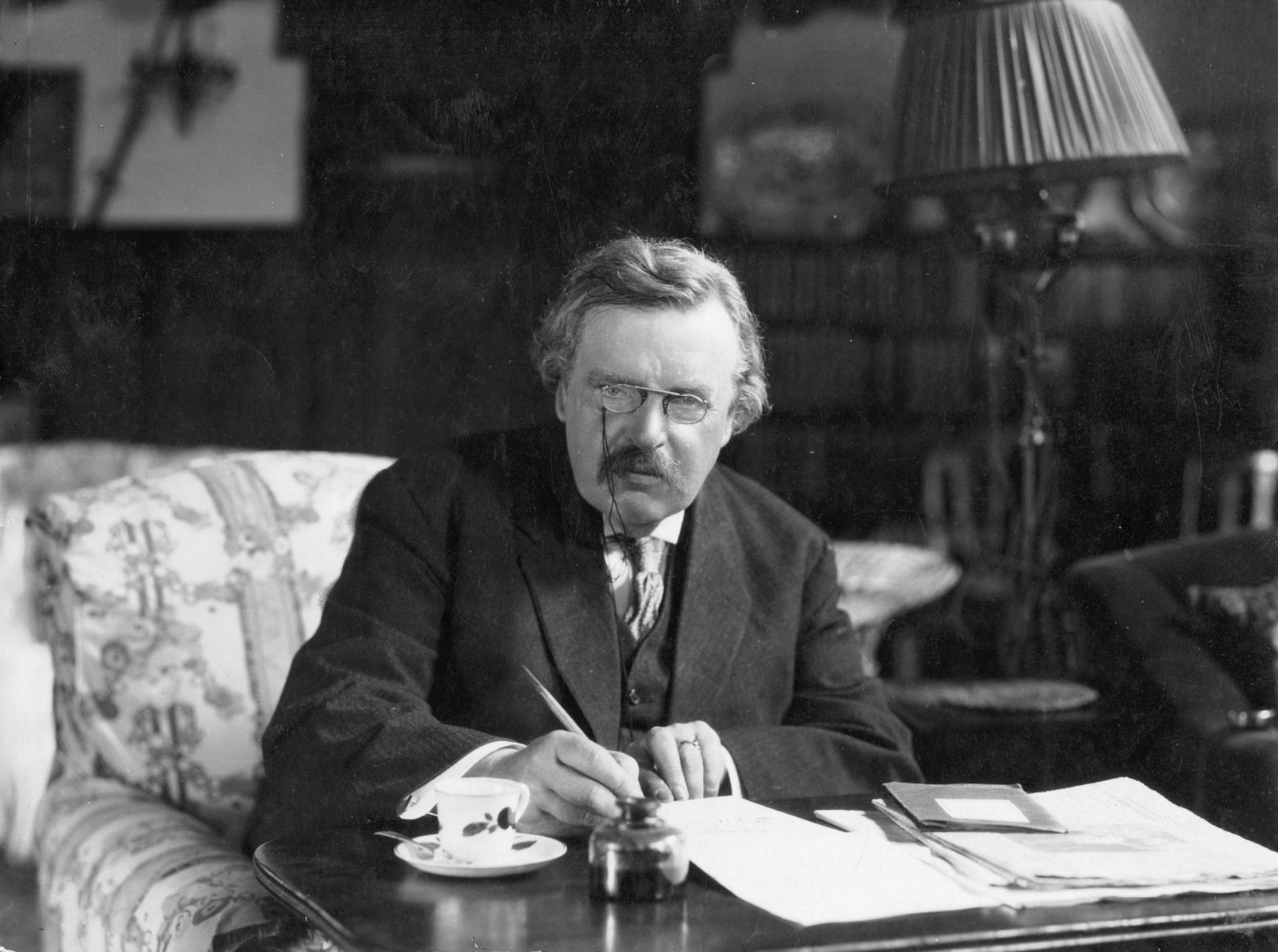
“It is easy enough to make a plan of life of which the background is black, as the pessimists do; and then admit a speck or two of star-dust more or less accidental, or at least in the literal sense insignificant. And it is easy enough to make another plan on white paper, as the Christian Scientists do, and explain or explain away somehow such dots or smudges as may be difficult to deny. Lastly it is easiest of all perhaps, to say as the dualists do, that life is like a chess-board in which the two are equal, and can as truly be said to consist of white squares on a black board or of black squares on a white board. But every man feels in his heart that none of these three paper plans is like life; that none of these worlds is one in which he can live. Something tells him that the ultimate idea of a world is not bad or even neutral; staring at the sky or the grass or the truths of mathematics or even a new-laid egg, he has a vague feeling like the shadow of that saying of the great Christian philosopher, St. Thomas Aquinas, 'Every existence, as such, is good.' On the other hand, something else tells him that it is unmanly and debased and even diseased to minimise evil to a dot or even a blot. He realises that optimism is morbid. It is if possible even more morbid than pessimism. These vague but healthy feelings, if he followed them out, would result in the idea that evil is in some way an exception but an enormous exception; and ultimately that evil is an invasion or yet more truly a rebellion. He does not think that everything is right or that every thing is wrong, or that everything is equally right and wrong. But he does think that right has a right to be right and therefore a right to be there, and wrong has no right to be wrong and therefore no right to be there.”
― G.K. Chesterton ,
from The Everlasting Man
“We know better than the scholars, even those of us who are no scholars, what was in that hollow cry that went forth over the dead Adonis and why the Great Mother had a daughter wedded to death. We have entered more deeply than they into the Eleusinian Mysteries and have passed a higher grade, where gate within gate guarded the wisdom of Orpheus. We know the meaning of all the myths. We know the last secret revealed to the perfect initiate. And it is not the voice of a priest or a prophet saying 'These things are.' It is the voice of a dreamer and an idealist crying, 'Why cannot these things be?”
― G.K. Chesterton ,
from The Everlasting Man
“Pan again!" said Dr. Bull irritably. "You seem to think Pan is everything." "So he is," said the Professor, "in Greek. He means everything." "Don't forget," said the Secretary, looking down, "that he also means Panic.”

“In reality, where everything passes on naturally, the copy follows the original, the image the thing which it represents, the thought its object, but on the supernatural, miraculous ground of theology, the original follows the copy, the thing its own likeness. "it is strange" says St. Augustine, "But nevertheless true, that this world could not exist if it was not known to God." That means the world is known and thought before it exists; nay it exists only because it was thought of. The existence is a consequence of the knowledge or of the act of thinking, the original a consequence of the copy, the object a consequence of its likeness.”
“[This philosophy] does not … regard the pen as the only fit organ for the revelation of truth, but the eye and ear, the hand and foot”
“Zabuna o odnosu između poimanja osobe i čovjeka može uzrokovati golemu štetu. Američki Vrhovni sud dvaput je pokazao da mu je prijeko potrebna lekcija iz filozofije jer ne shvaća da ljudska bića spadaju pod osobe, a ne obrnuto, da su ljudska bića osobe te kao takve posjeduju temeljna ljudska prava. Dred Scott proglasio je crnce nepotpunim osobama opravdavši tako ropstvo i provodeći povratak odbjeglih robova kao da se radi o vlasništvu, a ne o osobama. Time im je oduzeo drugo temeljno ljudsko pravo, pravo na slobodu. Jedno stoljeće kasnije slučaj oduzeo je nerođenoj djeci prvo osnovno pravo svake osobe, pravo na život. Ovo se temelji na filozofiji koja je zapravo identična nacističkoj: država uzima sebi moć da proglasi jednu vrstu ljudskih bića ne-osobama [bilo crnce, bilo Židove, bilo nerođene]. Osim što je riječ o prestrašnu moralu, radi se i o jako lošoj logici. Naime, smatra "osobe" užom kategorijom od "ljudskih bića". Postojanje anđela pokazuje da se zapravo radi o višoj kategoriji.”
“It is often said that we live in a youth culture. It's a lie. We live in an old culture. We idolize youth because we are old. We are tired and bored. Ancient cultures respected the old because those cultures were young. They were not bored.”
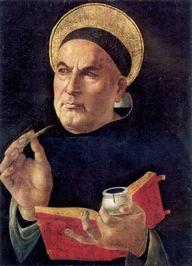
“Causes of individuals presuppose causes of the species, which are not univocal yet not wholly equivocal either, since they are expressing themselves in their effects. We could call them analogical. In language too all universal terms presuppose the non-univocal analogical use of the term *being*.”
“For every relationship involves two related terms. Sometimes relationships are not real in either term, but arise from the way we think of the terms: we think identity, for example, by thinking one thing twice over and relating it to itself; and occasionally we relate what exists to what does not exist, or generate purely logical relations like that of genus to species. Sometimes relationships are real in both terms: grounded in the quantity of both, in the case of relationships like big/small or double/half, or in their activity and passivity, in the case of causal relationships, like mover-moved and father/son. Sometimes relationships are real in only one of the terms, with the other merely thought of as related [reciprocally] to that one; and this happens whenever the two terms exist at different levels. Thus seeing and understanding really relates us to things, but being seen and understood by us is not something real in the things; and similarly a pillar to the right of us does not itself have a left and a right.”
“What causes love, since it is a passion, is its object; and since it is a sort of affinity or agreement with the object, what causes love is the goodness or agreeableness of that object. Evil can only be loved because it seems good, because being partially good it is perceived as wholly so. And the beautiful is a form of the good: if something is agreeable in general we call it good, and if the perception of it is agreeable we call it beautiful. But goodness must be known before it can become the object of love, so knowledge itself can be said to cause love. Knowing is an activity of reason, which abstracts from things and then makes connections between them, needing to know each part and property and power of things if it is to know them perfectly. But loving is an appetite for things as they stand, and to love perfectly we need only love them as they are perceived to exist in themselves.”
“*There is only one God*. Whatever exists is *ipso facto* individual; to be one it needs no extra property and calling it one merely denies that it is divided. Simple things are neither divided nor divisible; composite things do not exist when their parts are divided. So existence stands or falls with individuality, and things guard their unity as they do their existence. But what is simply speaking one can yet in certain respects be many: an individual thing, essentially undivided, can have many non-essential properties; and a single whole, actually undivided, can have potentially many parts. Only when one is used to count with does it presuppose in what it counts some extra property over and above existence, namely, quantity. The one we count with contrasts with the many it counts in the way a unity of measurement contrasts with what it measures; but the individual unity common to everything that exists contrasts with plurality simply by lacking it, as undividedness does division. A plurality is however *a* plurality: though simply speaking many, inasmuch as it exists, it is, incidentally, one. A continuum is homogeneous: its parts share the form of the whole (every bit of water is water); but a plurality is heterogeneous: its parts lack the form of the whole (no part of the house is a house). The parts of a plurality are unities and non-plural, though they compose the plurality not as non-plural but as existing; just as the parts of a house compose the house as material, not as not houses. Whereas we define plurality in terms of unity (many things are divided things to each of which is ascribed unity), we define unity in terms of division. For division precedes unity in our minds even if it doesn’t really do so, since we conceive simple things by denying compositeness of them, defining a point, for example, as lacking dimension. Division arises in the mind simply by negating existence. So the first thing we conceive is the existent, then―seeing that this existent is not that existent―we conceive division, thirdly unity, and fourthly plurality. There is only one God. Firstly, God and his nature are identical: to be God is to be this individual God. In the same way, if to be a man was to be Socrates there would only be one man, just as there was only one Socrates. Moreover, God’s perfection is unlimited, so what could differentiate one God from another? Any extra perfection in one would be lacking in the other and that would make him imperfect. And finally, the world is one, and plurality can only produce unity incidentally insofar as it too is somehow one: the primary and non-incidental source of unity in the universe must himself be one. The one we count with measures only material things, not God: like all objects of mathematics, though defined without reference to matter, it can exist only in matter. But the unity of individuality common to everything that exists is a metaphysical property applying both to non-material things and to God. But what in God is a perfection has to be conceived by us, with our way of understanding things, as a lack: that is why we talk of God as lacking a body, lacking limits and lacking division.”
“It was necessary for man's salvation that there should be a knowledge revealed by God besides philosophical science built up by human reason ... because man is directed to God as to an end that surpasses the grasp of his reason: "The eye has not seen, O God...what things Thou hast prepared for them that wait for Thee" (Is 66:4). But the end must first be known by men who are to direct their ... actions to the end. Hence it was necessary for the salvation of man that certain truths about God which exceed human reason should be made known to him by divine revelation. Even as regards those truths about God which human reason could have discovered, it was necessary that man should be taught by a divine revelation; because the truth about God such as reason could discover would only be known by a few, and that after a long time, and with the admixture of many errors. Whereas man's whole salvation, which is in God, depends upon the knowledge of this truth. Therefore, in order that the salvation of men might be brought about more fitly and more surely, it was necessary that they should be taught divine truths by divine revelation.”
― Thomas Aquinas ,
topics: christianity , existence-of-god , god , philosophy , religion-and-philosophy , saint-thomas-aquinas , summa
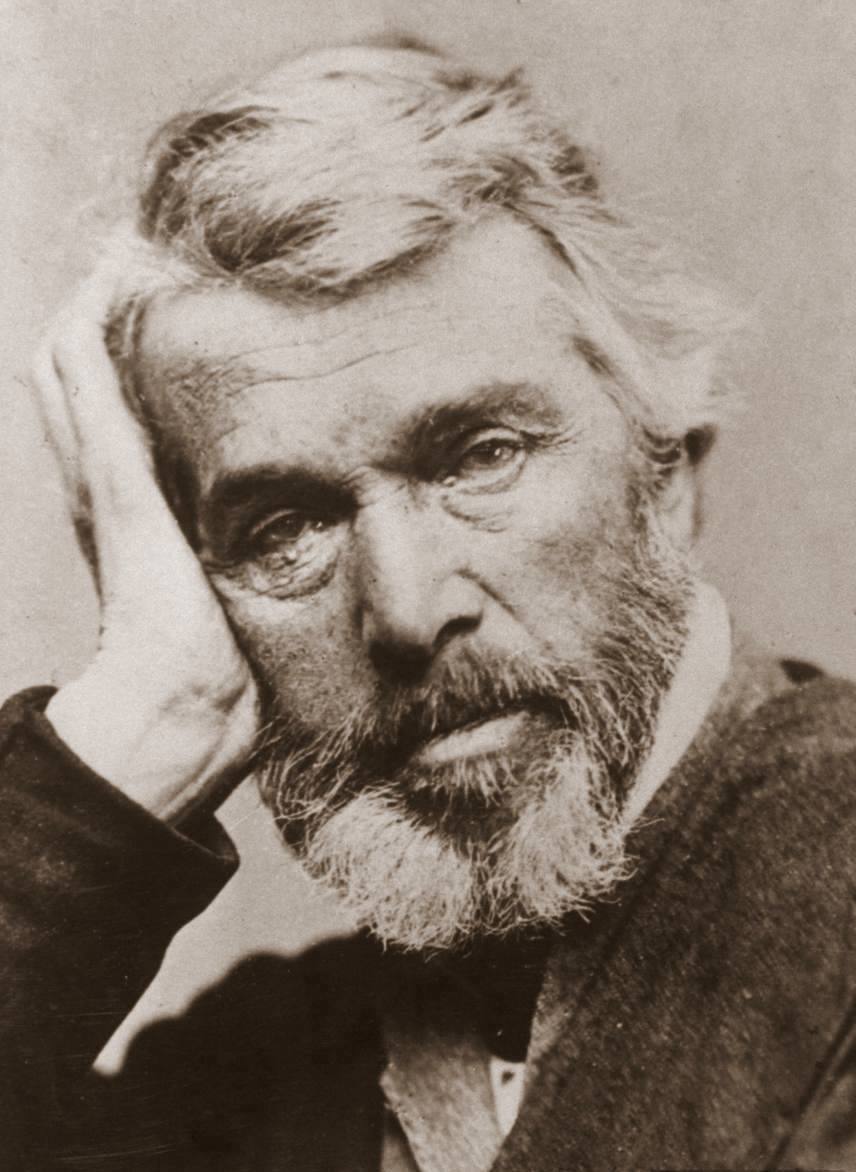
“Bir şey də aydındır: Dünyada insanı sevdirən, yalnız məhəbbətin gücüdür.”
“Bizdə ilk təəssürata meyil olduqca güclüdür, buna görə də doğruya oxşamayan nə varsa hamısına inanmağa hazırıq, bu təəssürat bizdə dərhal kök salıb qalır, vay o adamın halına ki, bunu çıxarıb atmağa və kökündən yox eləməyə təşəbbüs edə!”
“Nə üçün insanın xoşbəxtliyini təşkil edən bir şey, həm də onun iztirablarının mənbəyi olmalıdır?”
“Lakin, insan öz təbiət etibarilə o qədər məhduddur ki, öz varlığının əvvəlini və axırını dərk edə bilmir.”
topics: classic-literature , death-of-a-loved-one , human , life , lotta , philosophy , romance , werther



Group of Brands


















© 2026 Bibleportal.com All rights reserved.