
Inspirational Quotes on Philosophy


“And further, God should not be regarded as older than His creations by any period of time, but rather by the peculiar property of His own single nature. For the infinite changing of temporal things tries to imitate the ever simultaneously present immutability of His life: it cannot succeed in imitating or equalling this, but sinks from immutability into change, and falls from the single directness of the present into an infinite space of future and past. And since this temporal state cannot possess its life completely and simultaneously, but it does, in the same manner, exist forever without ceasing, it therefore seems to try in some degree to rival that which it cannot fulfill or represent, for it binds itself to some sort of present time out of this small and fleeting moment; but inasmuch as this temporal present bears a certain appearance of that abiding present, it somehow makes those, to whom it comes, seem to be in truth what they imitate. But since this imitation could not be abiding, the unending march of time has swept it away, and thus we find that it has bound together, as it passes, a chain of life, which it could not by abiding embrace in its fullness. And thus if we would apply proper epithets to those subjects, we can say, following Plato, that God is eternal, but the universe is continual.”

“What is time? Who can explain this easily and briefly? Who can comprehend this even in thought so as to articulate the answer in words? Yet what do we speak of, in our familiar everyday conversation, more than of time? We surely know what we mean when we speak of it. We also know what is meant when we hear someone else talking about it. What then is time? Provided that no one asks me, I know. If I want to explain it to an inquirer, I do not know. But I confidently affirm myself to know that if nothing passes away, there is no past time, and if nothing arrives, there is no future time, and if nothing existed there would be no present time. Take the two tenses, past and future. How can they 'be' when the past is not now present and the future is not yet present? Yet if the present were always present, it would not pass into the past: it would not be time but eternity. If then, in order to be time at all, the present is so made that it passes into the past, how can we say that this present also 'is'? The cause of its being is that it will cease to be. So indeed we cannot truly say that time exists except in the sense that it tends toward non-existence.”
― Augustine ,
from Confessions

“One gains by losing and loses by gaining.”

“It is even so in a commonwealth and in the councils of princes; if ill opinions cannot be quite rooted out, and you cannot cure some received vice according to your wishes, you must not, therefore, abandon the commonwealth, for the same reasons as you should not forsake the ship in a storm because you cannot command the winds. You are not obliged to assault people with discourses that are out of their road, when you see that their received notions must prevent your making an impression upon them: you ought rather to cast about and to manage things with all the dexterity in your power, so that, if you are not able to make them go well, they may be as little ill as possible; for, except all men were good, everything cannot be right, and that is a blessing that I do not at present hope to see.”

“In short, one may say anything about the history of the world--anything that might enter the most disordered imagination. The only thing one can't say is that it's rational. The very word sticks in one's throat.”
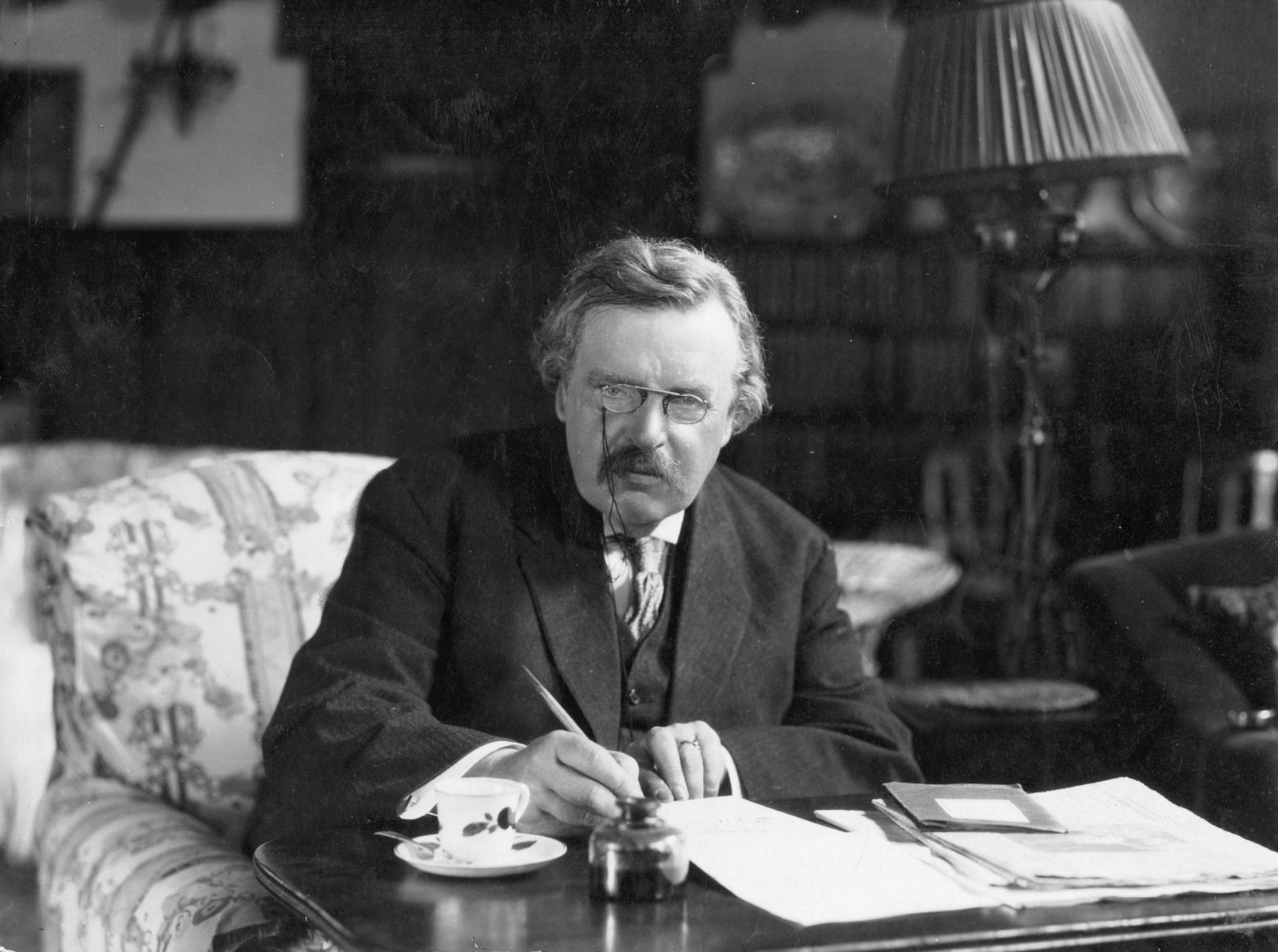
“The life of man is a story; an adventure story; and in our vision the same is true even of the story of God. The Catholic faith is the reconciliation because it is the realisation both of mythology and philosophy. It is a story and in that sense one of a hundred stories; only it is a true story. It is a philosophy and in that sense one of a hundred philosophies; only it is a philosophy that is like life. But above all, it is a reconciliation because it is something that can only be called the philosophy of stories. That normal narrative instinct which produced all the fairy tales is something that is neglected by all the philosophies—except one. The Faith is the justification of that popular instinct; the finding of a philosophy for it or the analysis of the philosophy in it. Exactly as a man in an adventure story has to pass various tests to save his life, so the man in this philosophy has to pass several tests and save his soul. In both there is an idea of free will operating under conditions of design; in other words, there is an aim and it is the business of a man to aim at it; we therefore watch to see whether he will hit it. Now this deep and democratic and dramatic instinct is derided and dismissed in all the other philosophies. For all the other philosophies avowedly end where they begin; and it is the definition of a story that it ends differently; that it begins in one place and ends in another. From Buddha and his wheel to Akhen Aten and his disc, from Pythagoras with his abstraction of number to Confucius with his religion of routine, there is not one of them that does not in some way sin against the soul of a story. There is none of them that really grasps this human notion of the tale, the test, the adventure; the ordeal of the free man. Each of them starves the story-telling instinct, so to speak, and does something to spoil human life considered as a romance; either by fatalism (pessimist or optimist) and that destiny that is the death of adventure; or by indifference and that detachment that is the death of drama; or by a fundamental scepticism that dissolves the actors into atoms; or by a materialistic limitation blocking the vista of moral consequences; or a mechanical recurrence making even moral tests monotonous; or a bottomless relativity making even practical tests insecure. There is such a thing as a human story; and there is such a thing as the divine story which is also a human story; but there is no such thing as a Hegelian story or a Monist story or a relativist story or a determinist story; for every story, yes, even a penny dreadful or a cheap novelette, has something in it that belongs to our universe and not theirs. Every short story does truly begin with creation and end with a last judgement.”
― G.K. Chesterton ,
from The Everlasting Man

“In a very real sense, every person who denies God is living of borrowed capital. He enjoys living as if the world is filled with morality, meaning, order and beauty, yet he denies the God whose existence makes such things possible. When you start with theism - "in the beginning God"- these destinations make complete sense. When you start with materialism though - "in the beginning, the particles" - that route takes you over a cliff of absurdity and despair.”
“Morality means choice. Choice means priorities. Priorities mean a hierarchy. A hierarchy means something at the top, a standard. That is the greatest good. If you have no greatest good, you have no hierarchy, you have no priorities. If you have no priorities, you cannot make intelligent choices. If you cannot make intelligent moral choices, you have no morality. You can still guide your life by your feelings or by social fashions, but that is not choice – not free, responsible, moral choice. Both feelings and fashions push you; you are passive. But moral choice is your own doing; you are active. You are responsible for your choices but not for your feelings or for your environment’s fashions.”
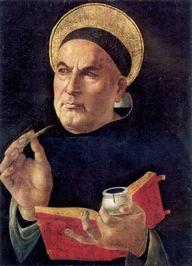
“Human nature inclines us to have recourse to petition for the purpose of obtaining from another, especially from a person of higher rank, what we hope to receive from him. So prayer is recommended to men, that by it they may obtain from God what they hope to secure from Him. But the reason why prayer is necessary for obtaining something from a man is not the same as the reason for its necessity when there is question of obtaining a favor from God. Prayer is addressed to man, first, to lay bare the desire and the need of the petitioner, and secondly, to incline the mind of him to whom the prayer is addressed to grant the petition. These purposes have no place in the prayer that is sent up to God. When we pray we do not intend to manifest our needs or desires to God, for He knows all things. The Psalmist says to God: "Lord, all my desire is before Thee" and in the Gospel we are told: "Your Father knoweth that you have need of all these things." Again, the will of God is not influenced by human words to will what He had previously not willed. For, as we read in Numbers 23:19, "God is not a man, that He should lie, nor as the son of man, that He should be changed"; nor is God moved to repentance, as we are assured in 1 Kings 15:29. Prayer, then, for obtaining something from God, is necessary for man on account of the very one who prays, that he may reflect on his shortcomings and may turn his mind to desiring fervently and piously what he hopes to gain by his petition. In this way he is rendered fit to receive the favor.”
“The emotion of love is an affective emotion, directly reacting to goodness, rather than an aggressive one, reacting to challenge. Not only our so-called natural ability to grow and propagate exemplify natural love, but every faculty has a built-in affinity for what accords with its nature. By passion we mean some result of being acted on: either a form induced by the agent (like weight) or a movement consequent on the form (like falling to the ground). Whatever we desire acts on us in this way, first arousing an emotional attachment to itself and making itself agreeable, and then drawing us to seek it. The first change the object produces in our appetite is a feeling of its agreeableness: we call this love (weight can be thought of as a sort of natural love); then desire moves us to seek the object and pleasure comes to rest in it. Clearly then, as a change induced in us by an agent, love is a passion: the affective emotion strictly so, the will to love by stretching of the term. Love unites by making what is loved as agreeable to the lover as if it were himself or a part of himself. Though love is not itself a movement of the appetite towards an object, it is a change the appetite undergoes rendering an object agreeable. Favour is a freely chosen and willing love, open only to reasoning creatures; and charity―literally, holding dear―is a perfect form of love in which what is loved is highly prized. To love, as Aristotle says, is to want someone’s good; so its object is twofold: the good we want, loved with a love of desire, and the someone we want it for (ourselves or someone else), loved with a love of friendship. And just as what exist in the primary sense are subjects of existence, and properties exist only in a secondary sense, as modes in which subjects exist; so too what we love in the primary sense is the someone whose good we will, and only in a secondary sense do we love the good so willed. Friendship based on convenience or pleasure is friendship inasmuch as we want our friend’s good; but because this is subordinated to our own profit or pleasure such friendship is subordinated to love of desire and falls short of true friendship.”
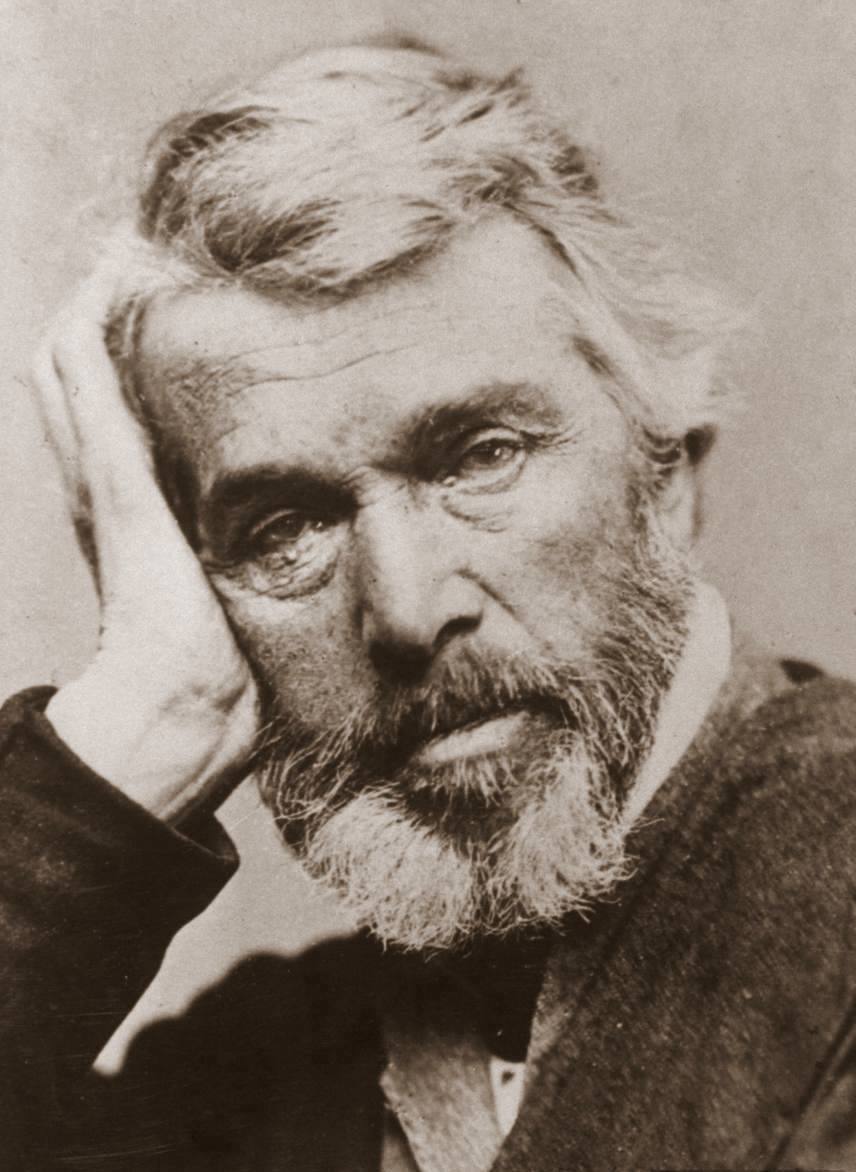
“But the man who humbly acknowledges the vanity of all this, who observes with what pleasure the thriving citizen converts his little garden into paradise, and how patiently even the poor man pursues his weary way under his burden, and how all wish equally to behold the light of the sun a little longer - yes, such a man is at peace, and creates his own world within himself;”

“I have found that the more I reflect philosophically on the attributes of God the more overwhelmed I become at his greatness and the more excited I become about Bible doctrine. Whereas easy appeals to mystery prematurely shut off reflection about God, rigorous and earnest effort to understand him is richly rewarded with deeper appreciation of who he is, more confidence in his reality and care, and a more intelligent and profound worship of his person.”

“Love has many positionings. Cordelia makes good progress. She is sitting on my lap, her arm twines, soft and warm, round my neck; she leans upon my breast, light, without gravity; the soft contours scarcely touch me; like a flower her lovely figure twines about me, freely as a ribbon. Her eyes are hidden beneath her lashes, her bosom is dazzling white like snow, so smooth that my eye cannot rest, it would glance off if her bosom were not moving. What does this movement mean? Is it love? Perhaps. It is a presentiment of it, its dream. It still lacks energy. Her embrace is comprehensive, as the cloud enfolding the transfigured one, detached as a breeze, soft as the fondling of a flower; she kisses me unspecifically, as the sky kisses the sea, gently and quietly, as the dew kisses a flower, solemnly as the sea kisses the image of the moon. I would call her passion at this moment a naive passion. When the change has been made and I begin to draw back in earnest, she will call on everything she has to captivate me. She has no other means for this purpose than the erotic itself, except that this will now appear on a quite different scale. It then becomes a weapon in her hand which she wields against me. I then have the reflected passion. She fights for her own sake because she knows I possess the erotic; she fights for her own sake so as to overcome me. She herself is in need of a higher form of the erotic. What I taught her to suspect by arousing her, my coldness now teaches her to understand but in such a way that she thinks it is she herself who discovers it. So she wants to take me by surprise; she wants to believe that she has outstripped me in audacity, and that makes me her prisoner. Her passion then becomes specific, energetic, conclusive, dialectical; her kiss total, her embrace without hesitation.—In me she seeks her freedom and finds it the better the more firmly I encompass her. The engagement bursts. When that has happened she needs a little rest, so that nothing unseemly will emerge from this wild tumult. Her passion then composes itself once more and she is mine.” —from_Either/Or: A Fragment of Life_, (as written by his pseudonym Johannes the Seducer)”
“No woman in maternity confinement can have stranger and more impatient wishes than I have.”
topics: philosophy
“Reality is infinitely diverse. It resists classification, inward life. Peculiar to us...not simply the official existence.”
topics: philosophy
“All that Mankind has done, thought, gained or been is lying as in magic preservation in the pages of Books. They are the chosen possession of men.”
“You can't skip over nature by logic. Logic presupposes three possibilities, but there are millions! Cut away a million, and reduce it all to the question of comfort! That's the easiest solution to the problem!”
“It is a pleasure to stand upon the shore, and see the ships tossed upon the sea; a pleasure to stand in the window of a castle, and to see a battle and adventures thereof below; but no pleasure is comparable to the standing upon the vantage ground of Truth, and to see the errors, and wanderings, and mists, and tempests, in the vale below.”

“If a man has not discovered something that he could die for, he’s not fit to live.”



Group of Brands


















© 2026 Bibleportal.com All rights reserved.